
What Happens When a Certificate Expires Without Anyone Noticing?
September 22, 2026
A certificate can look like a small piece of paperwork. It might be a PDF in an inbox, a document in a shared drive, a record attached to a supplier profile, or a badge displayed on a product page. But in the food and beverage industry, certification documents can represent something much bigger: evidence that a product, facility, supplier, process, or operation meets a particular standard or requirement.
And that creates a problem. What happens when the certificate is no longer valid, but nobody notices?
The answer depends on the certification and the applicable rules. Not every food certificate expires in the same way. Some certifications have defined validity periods, while others operate under continuing certification arrangements. The underlying business problem, however, is similar: a company can continue relying on information that is no longer current.
A Certificate Is Not the Same as Permanent Proof
Food companies deal with many different types of certifications, approvals, test results, and verification documents. These can include organic certification, food safety certification, allergen controls, gluten-free verification, laboratory testing, certificates of analysis, supplier approvals, and product specifications.
Some certifications require periodic review or renewal. Others have specific validity periods. Some programs use continuing certification rather than a simple expiration date. For example, SQF certification is valid for one year, and certified sites must complete the required re-certification process to maintain certification.
USDA organic certification works differently. Under the USDA National Organic Program, an organic certificate itself does not contain an expiration date. Once an operation is certified, its certification continues until it is surrendered, suspended, or revoked. Certifying agents issue updated certificates as required, including when information on the certificate changes.
This distinction matters. The real question isn't simply, "Did the PDF expire?" The more important question is, "Is the underlying certification or verification still valid for the claim being made today?"
The First Problem: Outdated Information Can Keep Circulating

Imagine a food company has hundreds of suppliers. Each supplier may provide documents covering organic certification, food safety certification, allergen controls, gluten-free verification, laboratory testing, certificates of analysis, supplier approvals, and product specifications.
Now imagine that one of those documents changes. The supplier receives an updated certificate, but the old document remains in an employee's email. A copy remains in a shared folder. Another copy is attached to a spreadsheet, while the product page still references the old information.
Nothing necessarily breaks immediately. The product may still be physically moving through the supply chain, orders may still be processed, and employees may continue working normally. But the company's evidence layer is becoming outdated.
The Second Problem: A Badge Can Outlive Its Evidence
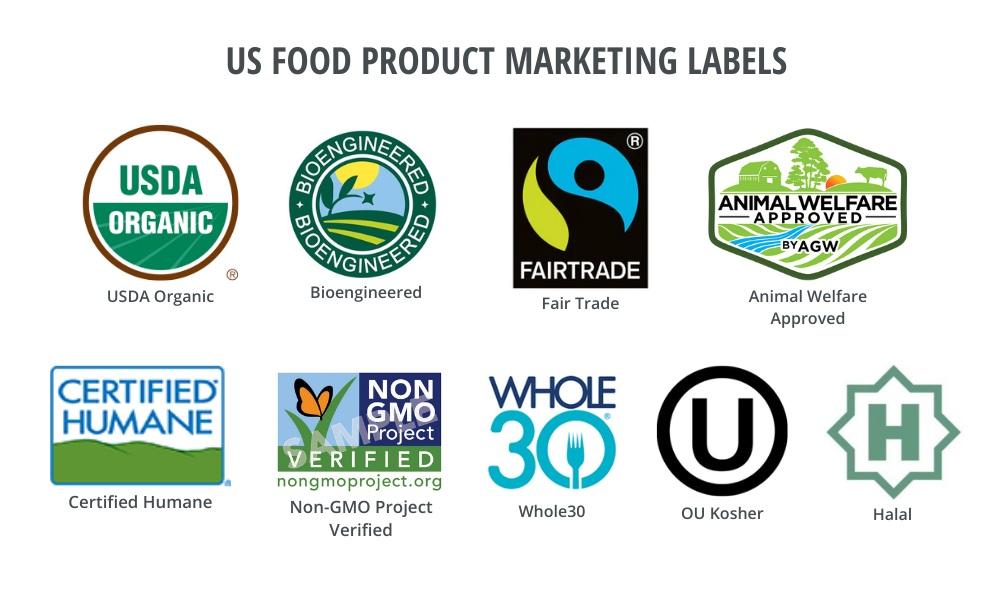
Consumers often see certification badges as simple visual signals: "Organic," "Gluten-Free," "Non-GMO," "Fair Trade," or "Vegan." The badge itself is easy to display. The difficult part is maintaining the evidence behind the claim.
For example, USDA explains that organic certification allows eligible operations to sell, label, and represent products as organic under USDA organic regulations. The claim therefore exists within an underlying certification and compliance system rather than simply being a graphic placed on packaging.
The same principle applies to other claims and verification programs. The badge is the visible layer, while the documentation and verification supporting it form the evidence layer. If those two layers become disconnected, companies can have a serious information-management problem.
The Third Problem: Employees May Not Know That Something Changed
This is where manual compliance processes can become difficult. A certificate may be updated by a supplier without the relevant information reaching everyone who needs it.
The procurement team may have the new document, while the quality team still has the old one. Marketing may still be using information from the previous certificate, while the e-commerce team continues displaying a badge based on earlier verification. Sales may even send an old certification document to a customer.
The problem is not necessarily that someone intentionally ignored compliance. Sometimes the information simply exists in too many places, making it difficult to ensure that everyone is working from the same current information.
The Fourth Problem: Audits Require Evidence

Food certification isn't only about what a company says. It can also be about what the company can demonstrate.
SQFI explains that auditors review documentation and records, interview personnel, and observe operational activities when assessing compliance with the SQF Code. For certain FDA-regulated claims, recordkeeping can also be important.
For example, FDA guidance on gluten-free food labeling explains that manufacturers may need records such as test results, certificates of analysis, or other verification documentation for certain foods and ingredients. For certain hydrolyzed and fermented foods labeled "gluten-free," specified records must be retained for at least two years.
So the question during an audit isn't simply, "Do you have a certificate?" It can become, "Can you demonstrate that the evidence supporting this product, process, or claim was appropriate and available when required?"
That becomes much harder when documents are scattered across emails, folders, spreadsheets, and supplier portals.
The Fifth Problem: Traceability Becomes Harder
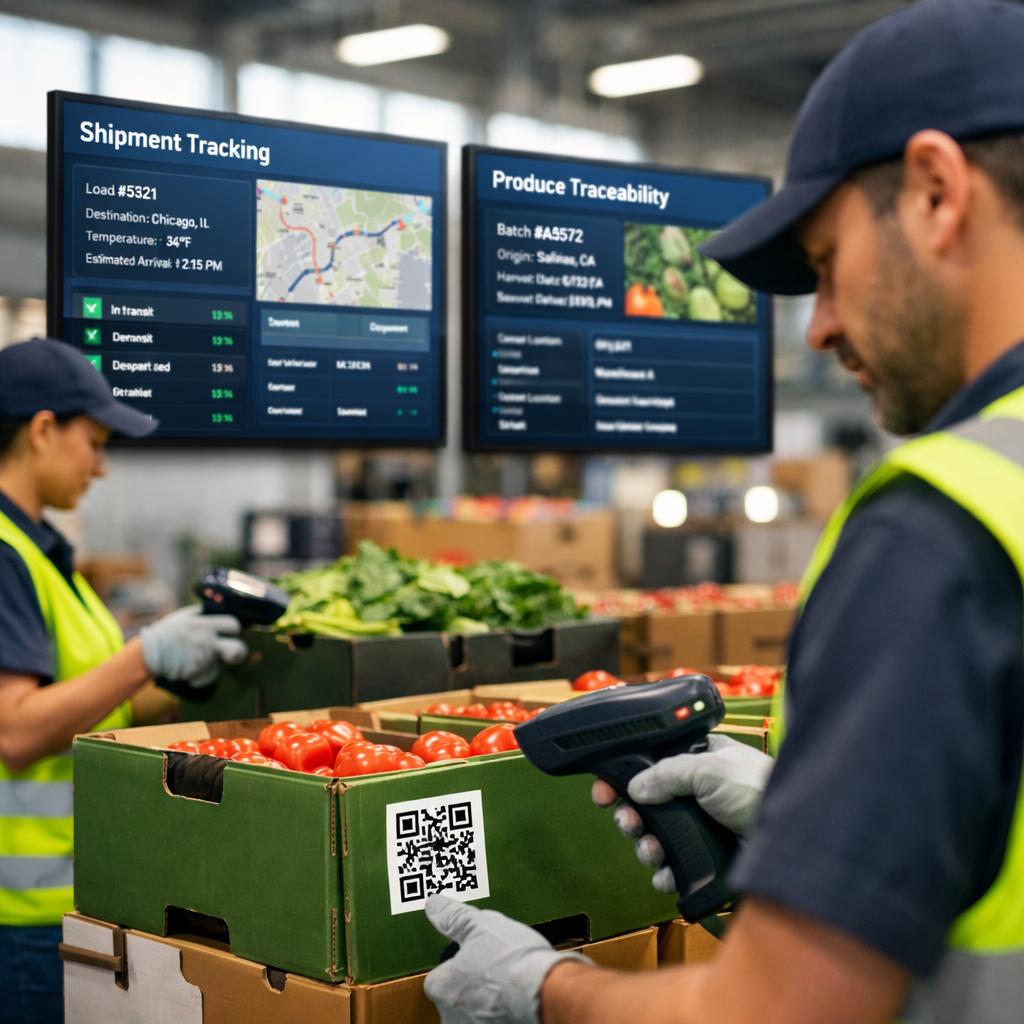
Certification information doesn't exist independently from the supply chain. A certificate can relate to a supplier, facility, product, ingredient, batch, production period, certification scope, or specific standard.
USDA's organic program illustrates why these relationships matter. USDA explains that organic certificates identify the certified operation and the specific organic products covered, allowing buyers and other parties to verify whether the operation is certified to produce or handle particular products.
This means a document shouldn't simply be stored as "Supplier_Certificate.pdf." Ideally, a business should be able to understand which supplier it belongs to, which facility it covers, which products are included, which certification applies, what scope is covered, what period is relevant, and what evidence supports it.
Without those connections, finding the right evidence can become a manual investigation.
What Happens When the Problem Is Finally Discovered?
The response depends on the certification, applicable regulations, product, and circumstances. One of the first steps may be investigating the affected products and determining which products, ingredients, suppliers, or batches were associated with the outdated information.
The company may then need to verify the supplier's current status, review affected records, update internal systems, and determine whether product claims remain supported. Where required, appropriate regulatory or corrective action may also need to be taken.
USDA states that violations of organic regulations can result in enforcement actions, including financial penalties or suspension or revocation of an organic certificate.
However, discovering an outdated certificate does not automatically mean that every product associated with it is illegal or must be recalled. The appropriate response depends on the specific certification, regulation, facts, and circumstances.
The Real Cost Is Often the Investigation
The certificate itself may be easy to replace. The expensive part can be answering the questions around it.
When did the certificate change? Who knew about the change? Which products were affected? Which batches used the supplier? Which customers received those products? Which claims referenced the certification? Which website pages displayed the information? Which documents were sent to customers? Which internal systems still contain the old version?
Suddenly, a simple document update becomes a supply-chain investigation.
This is where digital traceability can become important. The more connected the evidence is to suppliers, products, batches, and claims, the easier it can be for teams to determine what changed and what may have been affected.
What If Certificates Were Continuously Monitored?
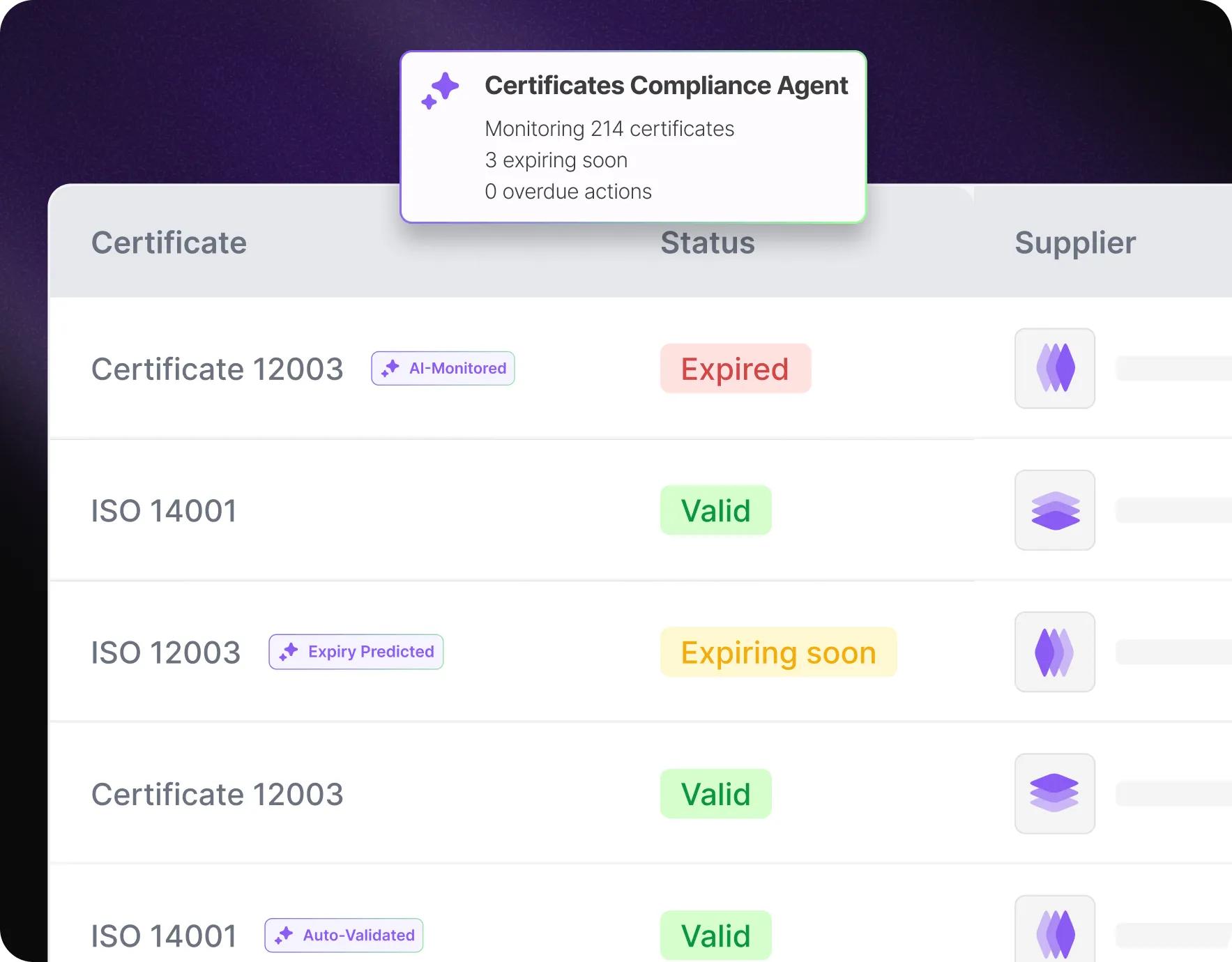
Instead of treating certification documents as static files, companies can treat them as compliance information that needs to be monitored and kept current.
A system could associate a certificate with a supplier, facility, product, certification, evidence, validity information, and current status. When information changes or requires attention, the system could surface the issue to the relevant team.
For example, instead of discovering a certification issue during an audit, a quality or compliance team could see a notification indicating that a supplier's certification requires review, along with the products and records associated with that supplier.
The goal isn't to replace the certification body or regulatory authority. The goal is to help companies maintain visibility into the evidence they rely on.
The Goal Isn't More Documents
Food companies already have plenty of documents. The challenge is knowing which document matters, what it proves, what it applies to, whether it is still relevant, and whether anything has changed.
Adding another folder doesn't necessarily solve that problem. Connecting the evidence to the relevant products, suppliers, certifications, and claims can provide much more useful context.
Instead of simply storing a document, companies can build a clearer relationship between the document and the supply-chain information it supports.
From Document Storage to Evidence Management
This represents an important shift for modern food businesses.
The traditional approach can look like this: receive a document, save it somewhere, and rely on someone to remember to check it later.
A more connected approach can be: receive, verify, connect, monitor, alert, and update.
That difference can change how a company manages compliance information. Instead of waiting for someone to discover an outdated document, the system can make the status visible. Instead of searching through hundreds of files, teams can trace evidence back to the relevant product or supplier. Instead of treating a certification badge as a static image, companies can connect the claim to supporting evidence.

Trust Depends on What Happens Behind the Badge
Consumers see the label. Auditors see the records. Supply-chain teams see the suppliers. Quality teams see the evidence.
The challenge is connecting all four.
A certification should not become a forgotten PDF sitting in a folder. It should be part of an evidence system that helps a company understand what is currently verified, what needs attention, and what information supports each product claim.
Because the most dangerous certificate isn't necessarily the one that has expired.
It is the one that changed — and nobody noticed.
And in an increasingly digital food supply chain, knowing the status of your evidence shouldn't require someone to manually search through thousands of documents.
The future of food compliance is not just storing proof.
It's knowing when that proof changes.
References
- USDA Agricultural Marketing Service — Organic Certificates (NOP 2603)
https://www.ams.usda.gov/sites/default/files/media/NOP2603_OrganicCertificates.pdf - USDA — Becoming a Certified Operation
https://www.ams.usda.gov/services/organic-certification/becoming-certified - USDA — Organic Certification
https://www.ams.usda.gov/services/organic-certification - FDA — Questions and Answers on the Gluten-Free Food Labeling Final Rule
https://www.fda.gov/food/nutrition-food-labeling-and-critical-foods/questions-and-answers-gluten-free-food-labeling-final-rule - SQFI — Auditing, Reporting and Renewal
https://www.sqfi.com/get-certified/auditing-reporting-and-renewal