The Next Consumer Won't Read Your Label: Their AI Assistant Will
September 15, 2026
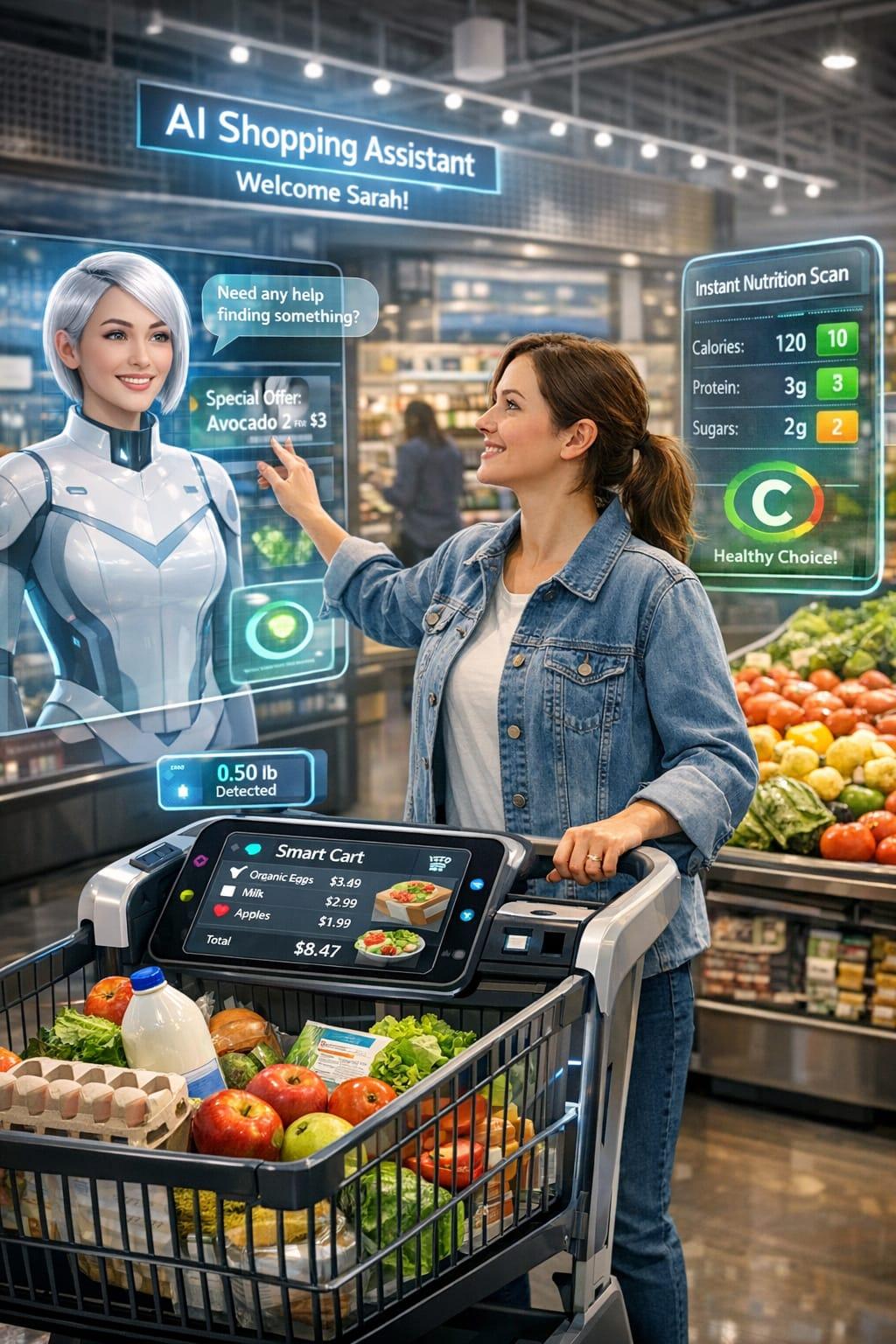
For decades, food packaging has been designed around a simple assumption: the consumer will pick up the product, read the label, compare it with another product, and make a purchasing decision. That assumption is beginning to change. Consumers increasingly use digital tools to research products, compare prices, understand ingredients, check reviews, and find products that match specific needs. At the same time, AI-powered shopping experiences are evolving from systems that simply return search results into assistants that can interpret natural-language requests and help people make purchasing decisions. Google, for example, is developing infrastructure for agentic commerce, while retailers are adapting their product information for AI-driven shopping experiences.
This creates an important question for food brands: What happens when the person making the purchasing decision isn't the only one reading your product information? The answer may increasingly involve an AI assistant acting as an intermediary between the consumer and the product.
The Label Was Designed for Humans
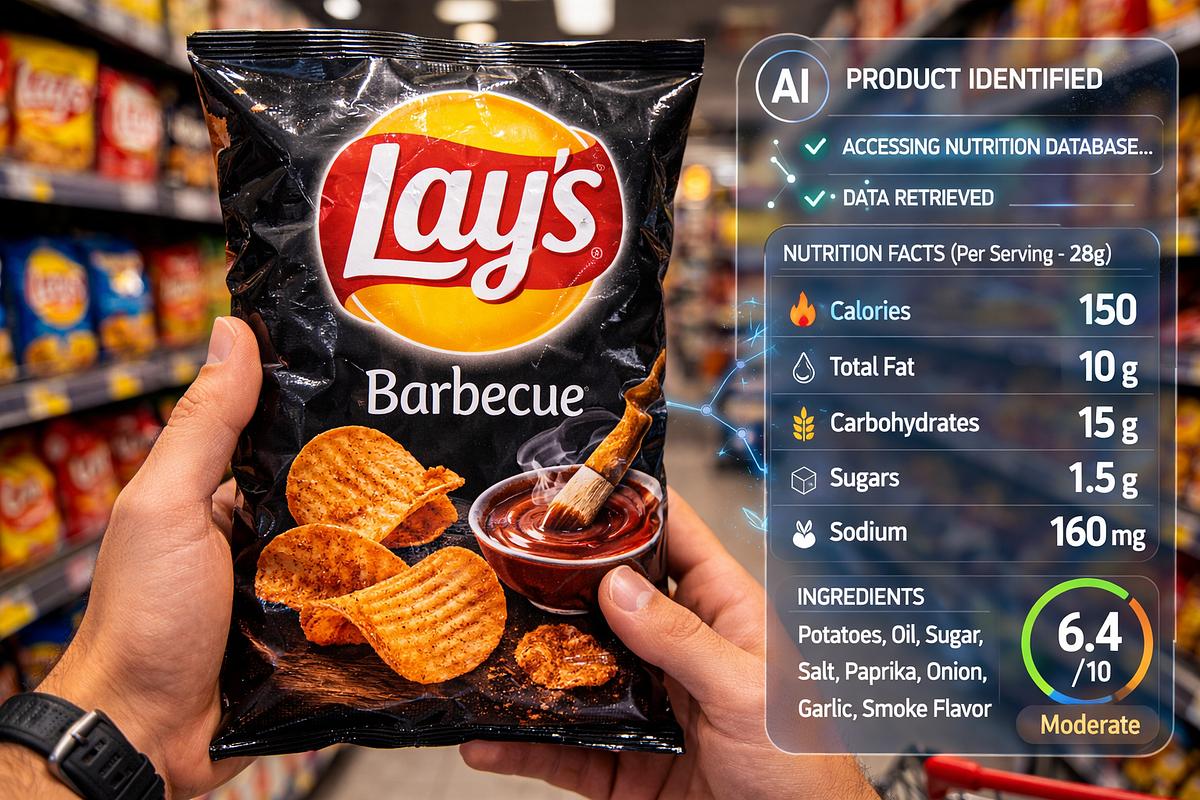
Consider what happens when a consumer stands in a supermarket aisle. They might look at the ingredients, nutrition information, allergen declarations, organic or other certification claims, country of origin, product claims, expiration information, brand reputation, and packaging design. For consumers with food allergies, label information can be particularly important. In the United States, for example, FDA rules require food labels to identify the food sources of major allergens. Consumers are also advised to read the entire ingredient list because not every relevant warning necessarily appears in a simple "Contains" statement.
But packaging has an obvious limitation: there is only so much information that can fit on it. A package cannot realistically contain an entire supply-chain history, every supporting certification document, detailed sourcing information, manufacturing records, batch information, or continuously updated product data. The physical label is therefore a summary of a much larger information system that exists behind the product.
The Consumer Journey Is Moving Beyond the Package
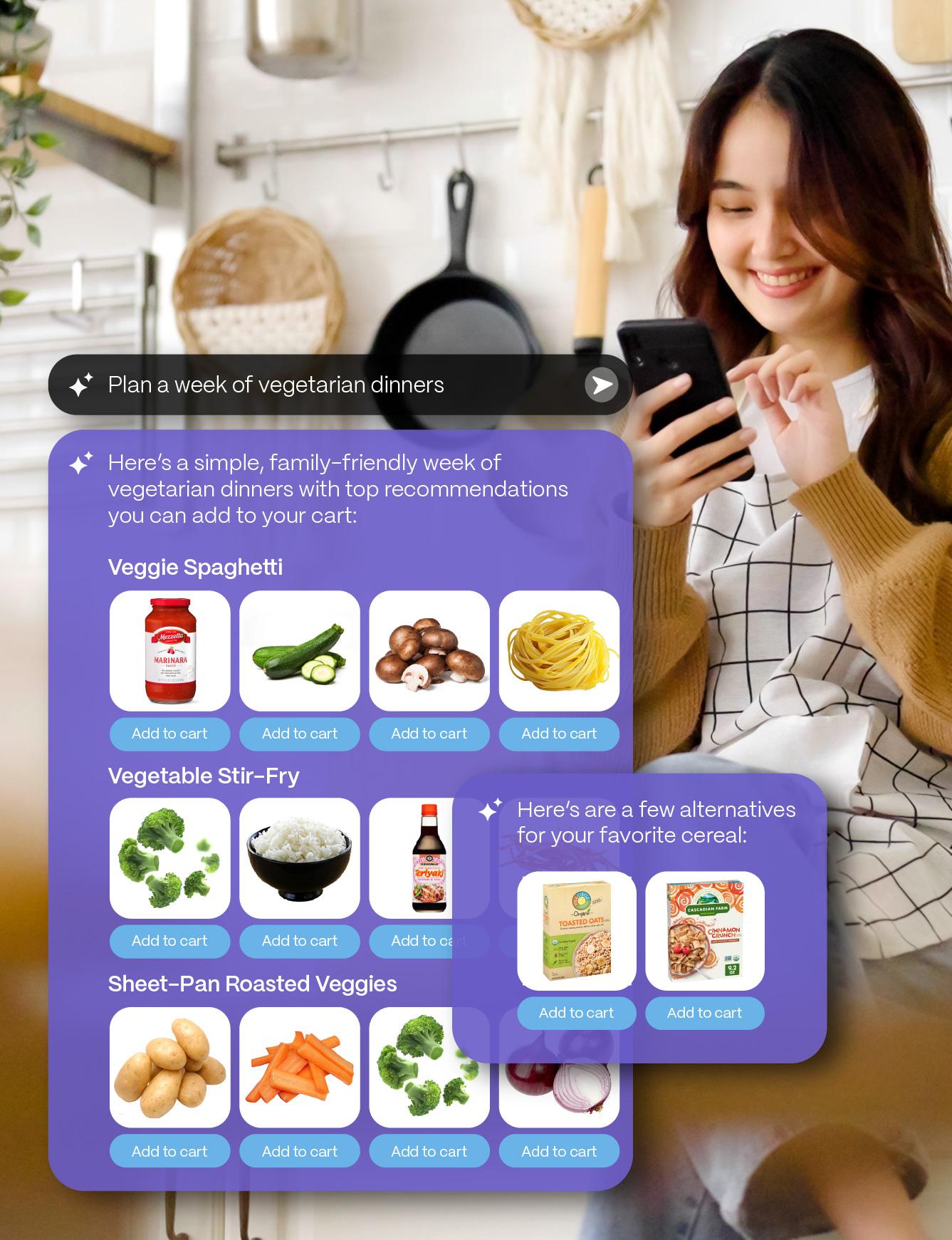
Imagine a consumer asking an AI assistant, "Find me a snack that is gluten-free, contains no peanuts, has a short ingredient list, and is certified organic." The traditional shopping experience would require the consumer to manually inspect multiple products and interpret their labels. An AI-assisted experience could potentially be very different. The consumer states their requirements in natural language, the assistant interprets those requirements, searches available product information, compares products, and presents options that appear to match the request.
This type of AI-driven shopping is already being developed. Google has been working on agentic commerce and AI-powered shopping experiences, while retailers and technology companies are exploring ways for AI agents to discover and interact with product information. However, there is an important limitation: AI can only work with the information it can access.
That makes the quality, structure, and availability of product data increasingly important.
Your Product Data Becomes Part of the Shopping Experience
For years, brands have thought about packaging as their primary communication channel. Then came websites, ecommerce product pages, mobile experiences, and QR codes. Now another layer is emerging: machine-readable product information.
Search engines already use structured product data to better understand information such as product names, prices, availability, reviews, and other attributes. This principle becomes increasingly relevant in an AI-driven shopping environment. If machines can understand your product information, digital systems can potentially use that information when helping consumers discover and evaluate products.
This is particularly important for food. A food product is not simply a name and a price. It can have hundreds of pieces of information associated with it, including ingredients, allergens, certifications, suppliers, origin, batches, manufacturing information, packaging, and distribution. Much of this information may already exist inside a company's systems. The challenge is making the relevant information accessible, accurate, structured, and connected.
A QR Code Can Become More Than a QR Code
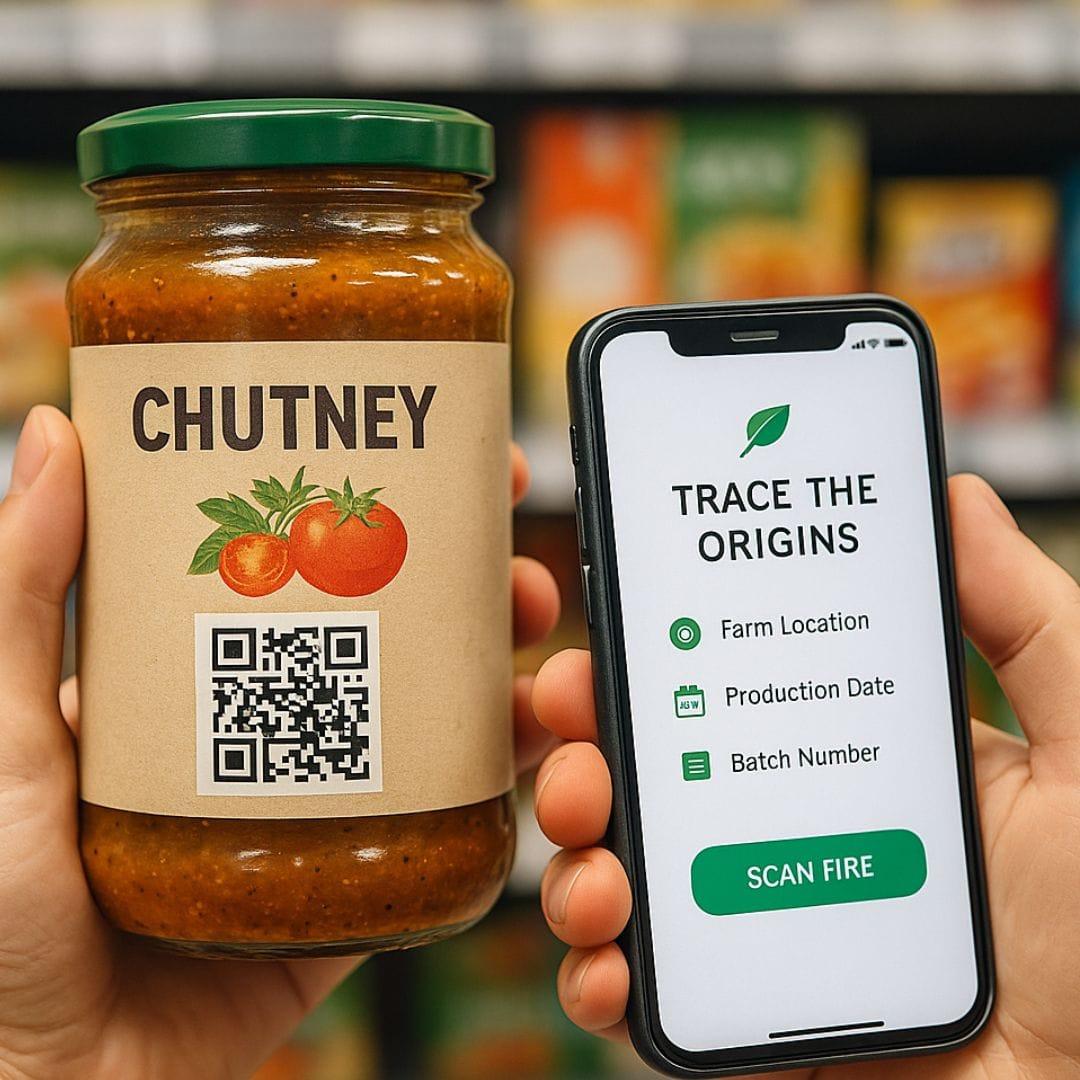
This is where technologies and standards such as GS1 Digital Link become interesting. GS1 Digital Link provides a way to connect a product's GS1 identification to online sources of information. Those sources can include product information, traceability information, recall-related information, and other digital resources.
Instead of thinking about a QR code simply as "Scan here to visit our website," brands can start thinking about it as a connection between the physical product and its digital identity. The package remains physical, but the information associated with that product can extend far beyond what can be printed on the packaging.
A consumer could scan a product and access information that would be impossible to fit on the package itself. More importantly, that same structured information can potentially be consumed by digital systems and applications.
The Digital Product Record Can Keep Evolving
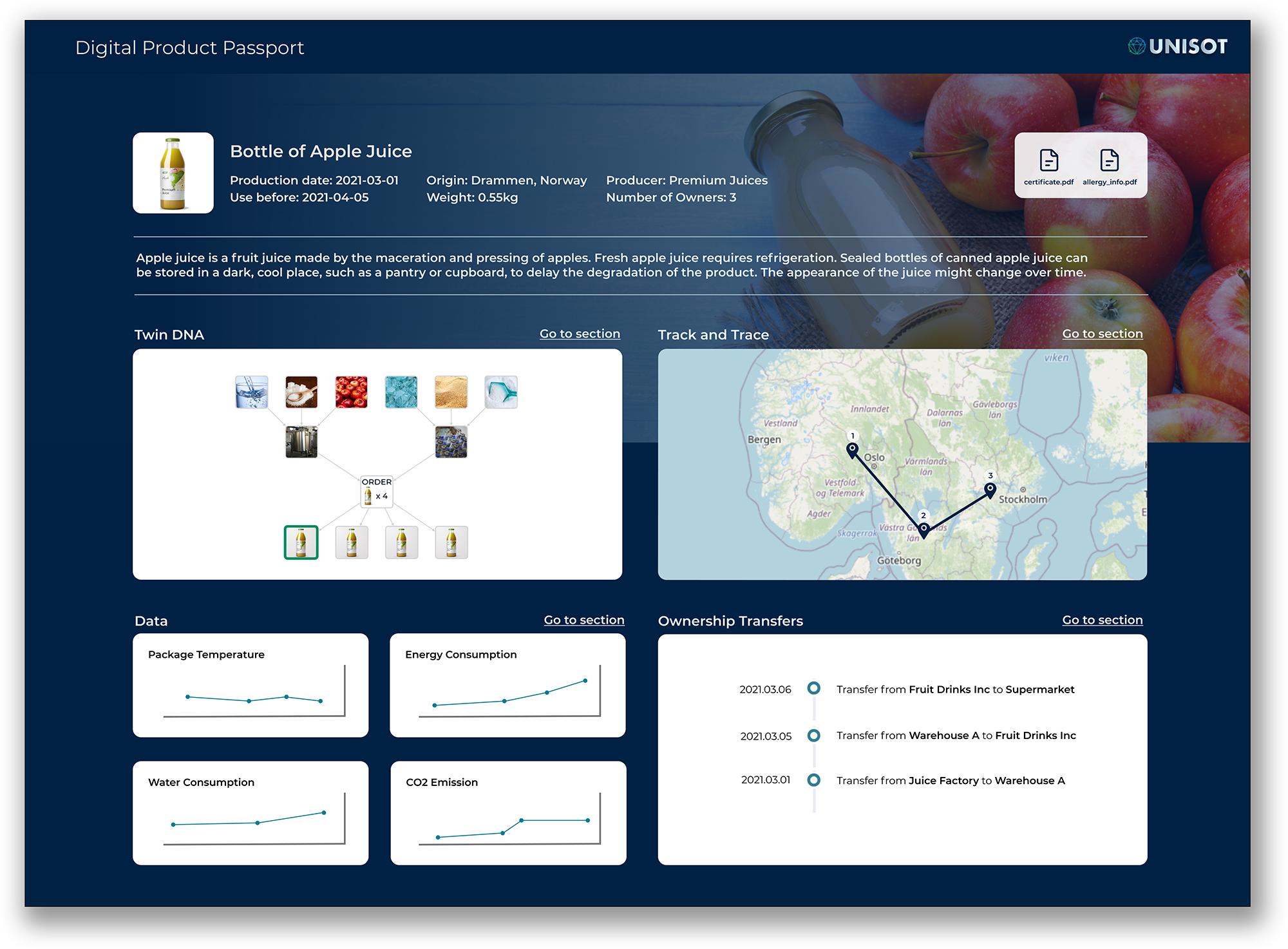
A printed package is relatively static, while a digital product record can be updated as information changes. Consider a hypothetical organic granola product. The physical package might state that it is organic, gluten-free, and contains almonds. Behind that package, however, a digital product record could provide additional information such as ingredients, allergen information, certification details, certification issuer, product origin, manufacturer information, batch information, traceability information, and supporting documentation.
The advantage is that the digital information does not have to be limited by the physical space available on the package. Standards such as GS1 Digital Link are designed to connect product identifiers with online information sources, allowing those connections and resources to evolve over time.
This creates something that traditional packaging cannot provide on its own: a continuously accessible information layer around the product.
But Can AI Trust the Information?
This may be the most important question in the entire discussion. If AI becomes increasingly involved in product discovery, simply having more information will not be enough. The information needs to be reliable, relevant, and appropriately supported.
Imagine two products. Product A says, "Organic. Sustainable. Premium ingredients." Product B provides specific information about its organic certification, certification issuer, ingredient information, allergen information, product origin, batch information, and supporting documentation.
Which product gives a digital system more useful information to work with?
The answer is not necessarily that AI will automatically select Product B. AI systems do not have a universal mechanism that guarantees one product will be ranked higher simply because it contains more data. However, structured, specific, and accessible information can provide digital systems with better inputs than vague marketing claims.
This is why the future of food transparency is not simply about more content. It is about better information and better evidence.
From Claims to Proof
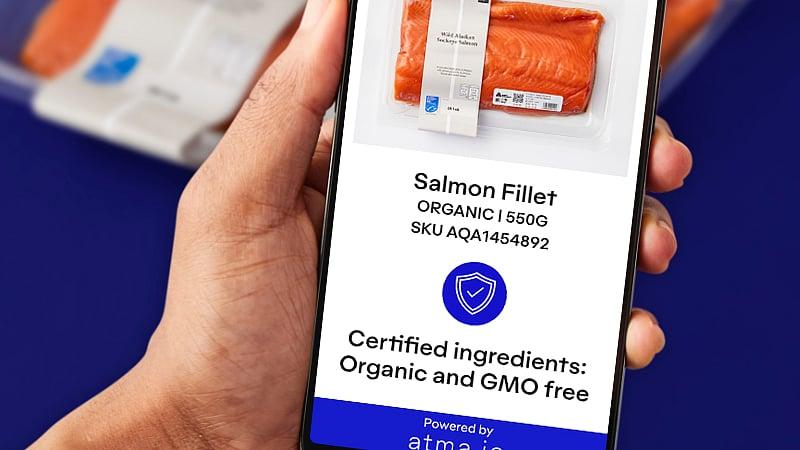
Consider the statement: "Organic."
A consumer sees two words. Behind those two words, however, there may be an entire chain of information. Who certified the product? What standard applies? Which organization issued the certification? Is the certification current? Which product or operation does it cover? Can the claim be connected to the actual product?
The label communicates the claim. The digital layer can provide additional context and supporting information.
This distinction becomes increasingly important as consumers use digital systems to ask questions that are difficult to answer from packaging alone. They may want to know which product has a verifiable certification, which product meets a particular dietary requirement, where a product originated, or whether particular information can be confirmed.
These aren't simply label-reading questions anymore. They are data questions.
The Rise of the "Invisible Shelf"
Physical retail has always had a shelf. Ecommerce created the digital shelf. AI introduces another possibility: what Google Cloud has described as an "invisible shelf," where AI agents can discover products and potentially help shoppers purchase them.
On a physical shelf, packaging helps a consumer notice a product. On a digital shelf, product pages, images, reviews, structured data, and other signals help products get discovered. On an AI-driven shopping experience, the product also needs to be understandable to the digital systems helping the consumer.
That changes the competitive question.
It is no longer only, "Does my product look good on the shelf?"
It increasingly becomes, "Can an AI system understand why my product is relevant to this consumer?"
AI Doesn't Eliminate the Label
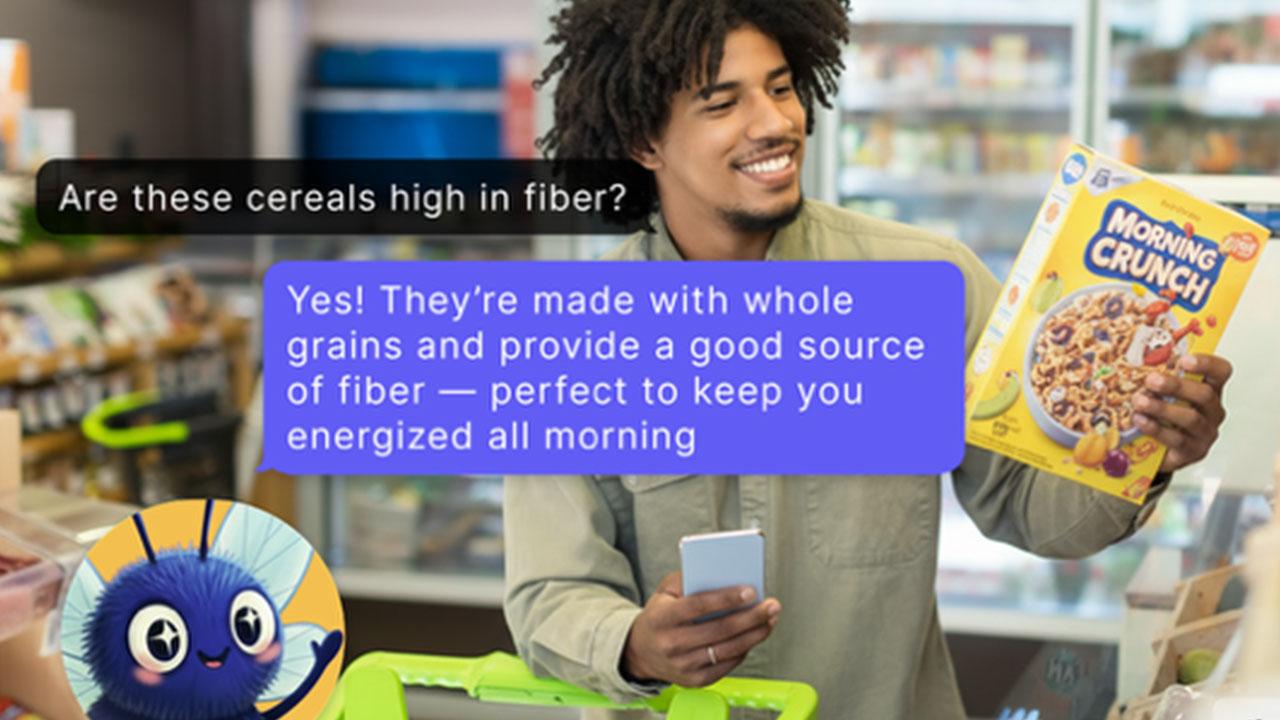
There is an important distinction here. The future is not necessarily a simple transition from labels to AI. Physical labels will remain important for regulatory compliance and for consumers who directly inspect products. People will continue to read packaging, particularly when making decisions about ingredients, allergens, nutrition, certifications, and other product characteristics.
Instead, we are likely to see a hybrid model in which the physical package communicates essential information, the digital layer provides additional information, and AI systems help consumers navigate and interpret that information.
The label does not become irrelevant.
It becomes one part of a much larger information system.
The New Question for Food Brands
For years, companies have asked, "What should we print on the package?" Increasingly, they should also ask, "What information should exist behind the package?"
That information could include product attributes, certifications, ingredients, allergens, traceability information, sourcing information, and other relevant data. Importantly, this information should not exist only as disconnected PDFs, spreadsheets, emails, and internal databases. It needs to be organized in ways that make it useful to people and increasingly understandable to digital systems.
This is a fundamental change in how brands should think about product information.
This Changes What "Good Product Content" Means
Traditional product content often focuses heavily on persuasion. Words such as "premium," "natural," "better," and "sustainably sourced" are designed to influence consumers.
But AI-assisted shopping creates another incentive: make product information precise and useful.
Instead of simply saying "Made responsibly," provide the relevant information behind the claim. Instead of simply saying "Certified," identify the certification and provide appropriate supporting information. Instead of saying "Traceable," show what can actually be traced.
The shift is from marketing language toward information architecture.
And that shift could become increasingly important as AI systems become more involved in product discovery.
The Competitive Advantage May Be Data Readiness
Imagine two brands competing for the same consumer. Both products are high quality. Both have attractive packaging. Both have similar prices.
One brand has a well-organized digital product record containing structured information about its products, certifications, ingredients, and relevant supply-chain information. The other relies primarily on static product pages and scattered documents.
There is no guarantee that an AI system will recommend the first brand. AI recommendations depend on the specific system, its data sources, algorithms, integrations, and the consumer's request.
However, the first brand has something valuable: information that is easier to access, interpret, connect, and potentially use across digital experiences.
As AI-driven commerce develops, that kind of data readiness could become increasingly important.
What Should Brands Do Now?
Food companies do not need to wait for AI shopping to become mainstream before improving their product information. They can begin by creating a reliable source of product truth and bringing important information together instead of leaving it scattered across disconnected systems.
They can structure product information clearly and make important attributes machine-readable. They can connect claims with appropriate supporting evidence. Where appropriate, they can connect product information with batch, lot, origin, and traceability information. They can also use technologies and standards such as GS1 Digital Link to connect physical products to online information.
Most importantly, brands should keep their information accurate and current.
The goal is not simply to create more data.
The goal is to create useful, trustworthy, connected data.
The New Packaging Stack
We can think about the evolution in three stages.
Yesterday, it was Package → Consumer.
Today, it is increasingly Package → Website → Consumer.
Tomorrow, it may become Package → Digital Product Identity → Product Data → AI → Consumer.
The physical product does not disappear. The label does not disappear. Instead, the label becomes the starting point of a much larger information journey.
The Consumer Is Changing. Product Information Must Change Too.
The most important change isn't that consumers will stop looking at labels. It is that consumers increasingly have another layer of intelligence between themselves and the product.
Instead of manually asking, "Is this product right for me?" a consumer can increasingly ask, "Find me a product that meets these requirements."
That seemingly small change has significant implications.
When a human reads a label, ambiguity can sometimes survive. When a digital system needs to compare information across many products, ambiguity becomes a data problem.
The brands that prepare for this shift won't simply optimize their packaging. They will build trusted, connected, structured, and accessible product information behind it.
Because the next generation of product discovery may not begin with a consumer standing in front of a shelf.
It may begin with a question:
"Which product should I buy?"
And increasingly, an AI assistant may be helping to answer it.
The Future of the Food Label Is Bigger Than the Label
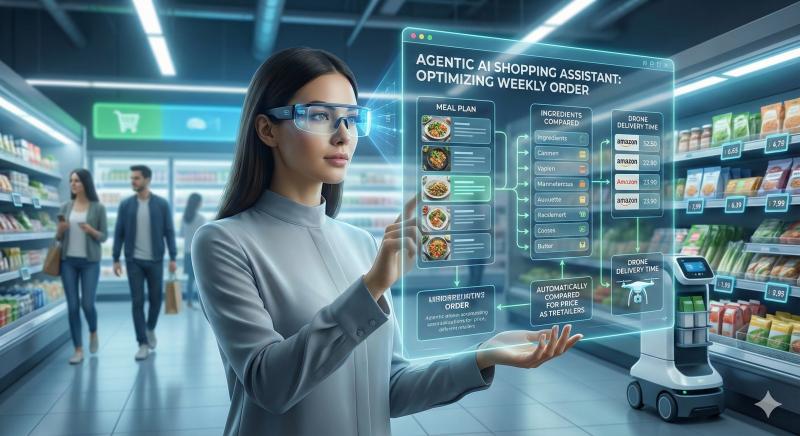
The future isn't about replacing packaging with AI. It is about connecting physical products to trustworthy digital information.
Standards such as GS1 Digital Link demonstrate how product identifiers can connect physical products to online information, while structured product data helps digital systems better understand product attributes.
For food brands, this creates a powerful opportunity.
Don't just make your product visible. Make it understandable.
Don't just make claims. Connect them to information.
Don't just prepare your product page for consumers. Prepare your product information for the digital systems that may help consumers choose.
Because the next consumer may still hold your product in their hands.
But increasingly, their AI assistant may be doing the research first.