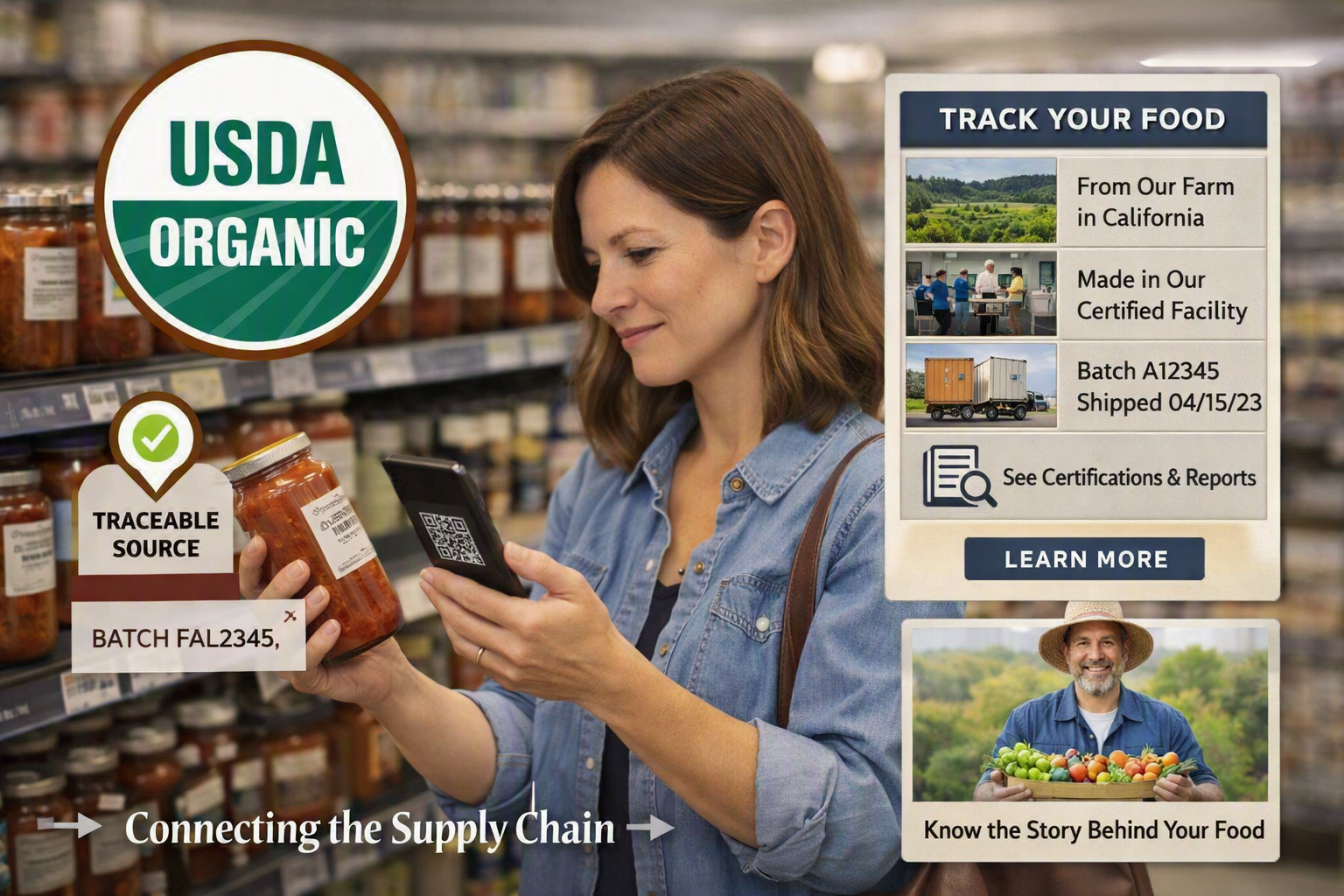
Why a label on its own isn't proof
Originally published as “The Consumer Trust Gap: Why Food Labels Alone Are No Longer Enough”
August 19, 2026
For decades, food labels have been the cornerstone of consumer purchasing decisions. A package tells us about ingredients, nutritional values, allergens, certifications, and country of origin. They remain essential and are governed by regulations designed to protect consumers. However, a new question is emerging: “Can the information on the label actually be verified?”
This is where the consumer trust gap begins. A label communicates a claim, but it does not provide the complete evidence behind it. A consumer may see the word “organic,” but the physical label cannot provide the complete history of how the product was produced, processed, handled, certified, and transported. This gap between a claim and its proof is becoming the central challenge for modern food brands.
The Complexity Hiding Behind the Package
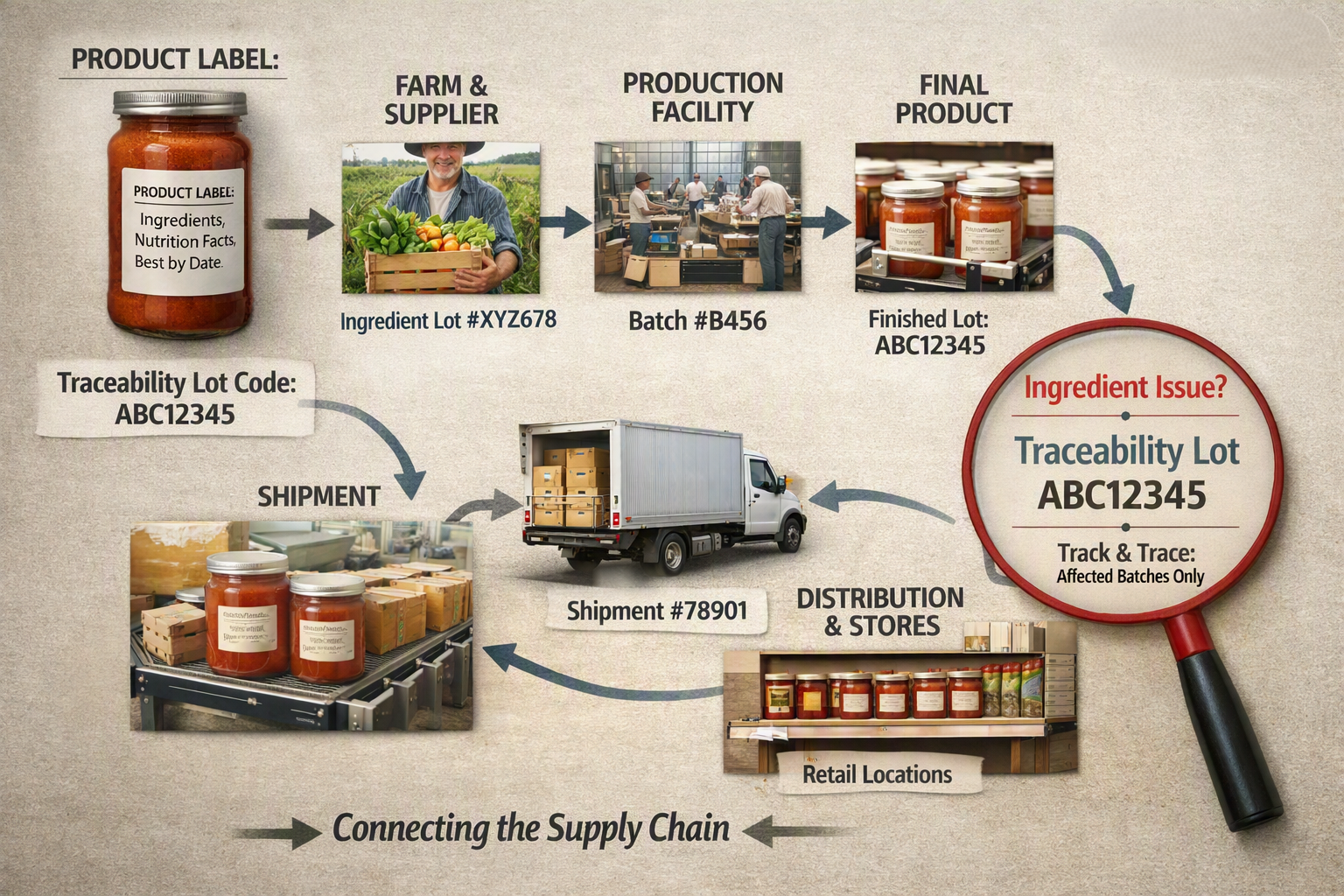
The modern food supply chain is far more complex than the label on the finished product suggests. A single product may pass through farmers, suppliers, processors, manufacturers, warehouses, distributors, and retailers. At each stage, information is generated about ingredients, production dates, testing, storage conditions, and certifications. The label represents the final product, while traceability systems connect that product to the entire history of its journey.
This distinction is critical because consumers are asking more detailed questions than ever before. They want to know where an ingredient originated, whether a sustainability claim has a defined basis, who issued a certification, and whether it is still valid. These questions represent a broader shift from accepting claims at face value to demanding accessible evidence.
The Role of Certification and Regulation
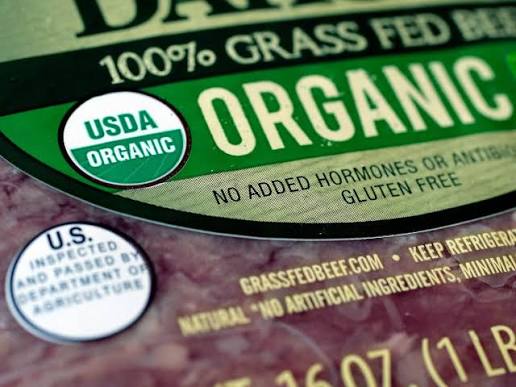
Certification plays a vital role in building trust. A legitimate certification is not simply a marketing logo; it represents defined standards, documentation, audits, and verification. The USDA organic system, for example, establishes stringent regulatory standards and certification requirements. However, consumers may not always understand what a certification means, who issued it, or what it truly covers. This creates an important distinction between certification and transparency. Certification provides assurance, but transparency helps consumers understand the evidence behind that assurance.
The challenge grows with environmental claims like "sustainable" or "eco-friendly." The U.S. Federal Trade Commission's Green Guides emphasize that such claims should be truthful, not misleading, and substantiated. The principle is simple: a claim should not communicate more than the available evidence can support.
Why Traceability Matters More Than the Label
Food safety provides another compelling reason for deeper traceability. When a problem is discovered, businesses and regulators need to connect affected products to their sources and distribution points. The U.S. FDA's Food Traceability Rule establishes requirements for recordkeeping, using concepts like Critical Tracking Events and Traceability Lot Codes to help maintain connections between products and supply-chain events.
This highlights the difference between a traditional label and a traceability system. A label communicates information about the finished product, whereas traceability connects information across the product's entire journey. The batch or lot becomes an increasingly important part of modern food transparency. Products that appear identical on a shelf may have been produced at different times, using different ingredients. The ability to access a specific batch history is what allows for precise action in a recall and provides granular proof to a consumer.
Digital Technology: The Bridge Over the Trust Gap
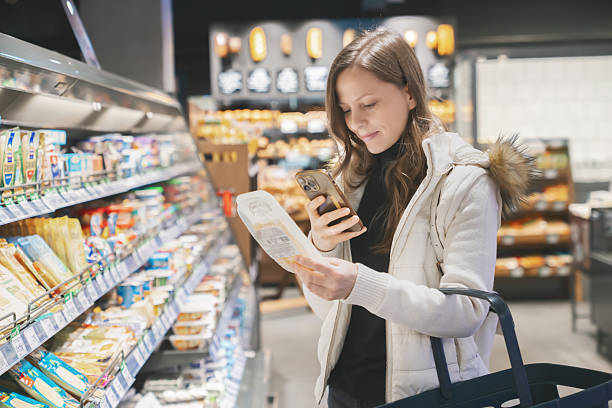
Digital technology provides an opportunity to bridge the trust gap. Instead of treating the label as the sole source of information, businesses can use digital product pages, QR codes, and smart labels to connect a physical product to additional, verifiable data. A consumer could scan a product to learn its origin, ingredient sourcing, and relevant certifications.
The objective is not to overwhelm consumers with data, but to present information in layers. The first layer provides simple answers: where it came from, what it contains, and which claims apply. For those who want more, a second layer can provide supporting evidence. Auditors and supply-chain partners can then access appropriate technical records. This creates a shift from simply saying “trust me” to providing the ability to “check it”.
Building a Future on Trust and Evidence
For food businesses, this represents a critical evolution. Instead of adding more claims to packaging, companies should focus on strengthening the evidence infrastructure behind those claims. A meaningful claim should have a clear definition, appropriate supporting evidence, and a clear understanding of what products or batches it relates to.
The future of food transparency is not about putting more information onto physical packaging. Packaging has limited space, while digital technologies can provide deep, layered information. A label remains fundamental for safety and compliance, but it becomes the starting point rather than the entire information system.
Ultimately, the most trusted brands will not necessarily be those with the greatest number of claims. They will be the brands that can clearly demonstrate the evidence supporting those claims. The question consumers are asking is moving beyond “What does this product claim?” to “How do you know?”
How TilliT Builds Trust Through Transparency
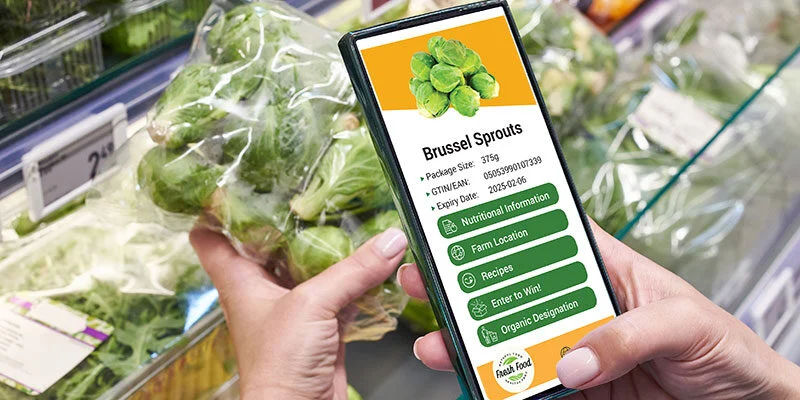
This is where TilliT provides a transformative solution. TilliT empowers food businesses to move beyond label claims by connecting product origin and supply chain data into a single, trusted system. It enables companies to verify food badges with documented proof and manage certifications in a centralized platform.
By generating transparent, SEO-friendly trust pages, TilliT makes products ready for AI-powered discovery while turning product stories into data-backed proof. This drastically reduces compliance effort and costs, ensuring that what's on the label is backed by what's in the record. TilliT helps brands answer the consumer's most critical question—“How do you know?”—with confidence and clarity.
Final Thoughts
The consumer trust gap is the defining challenge for food brands in the modern marketplace. Labels are no longer a sufficient defense against skepticism; they are simply the beginning of the conversation. Food companies operating in complex global markets need to provide proof, not just promises. Trust is not created by a statement; trust is created by proof. With TilliT, every product can have a story backed by data, turning compliance into confidence and transparency into trust.