Beyond Compliance: Why Food Transparency Is Becoming a Business Strategy
September 28, 2026
For years, food traceability and compliance have largely been treated as operational responsibilities. Food businesses have had to maintain records, manage suppliers, document certifications, track products, and demonstrate that their products meet applicable requirements.
But the role of this information is changing. Food transparency is increasingly becoming more than a compliance exercise. It can also influence how brands communicate with consumers, explain their products, differentiate themselves, and build confidence around the claims they make.
The opportunity is simple: the same information that businesses collect for regulatory and operational purposes can, when appropriate, also become valuable information for customers.
Compliance Is Only the Starting Point

Food traceability exists primarily for important food-safety and regulatory reasons. In the United States, the FDA's Food Traceability Rule establishes additional recordkeeping requirements for businesses that manufacture, process, pack, or hold foods included on the Food Traceability List. Covered businesses must maintain Key Data Elements associated with specific Critical Tracking Events, helping information about covered foods move through the supply chain. The FDA currently states that it will not enforce the rule before July 20, 2028, following congressional direction.
In the European Union, traceability is also an important part of the food-safety system. The European Commission describes traceability as a cornerstone of EU food safety and requires businesses to maintain information that allows food to be traced through the supply chain. Traceability can help businesses respond to food-safety problems and support information about the origin and movement of food.
These requirements demonstrate that traceability is not simply a marketing concept. It is an established part of food-safety and supply-chain management. However, businesses do not necessarily have to stop using this information once a regulatory requirement has been satisfied.
The Information Behind the Label Has Value
Consider a product carrying a claim such as "Organic," "Gluten-Free," or "Non-GMO." For consumers, such statements can influence how they understand a product and whether it fits their preferences or requirements.
However, a claim on packaging is not the same as having easy access to information about the basis for that claim. This does not mean that every consumer needs to examine certification documents before purchasing a product. It means that businesses have an opportunity to make relevant information more accessible when customers want to learn more.
Food-information regulations already establish requirements for the information that must be provided to consumers. In the European Union, for example, Regulation (EU) No 1169/2011 establishes requirements covering food information, including areas such as allergen and nutrition information for applicable foods.
Digital product experiences can provide additional context beyond what can reasonably fit on a physical package. Depending on the product and the information a business is permitted to share, this could include information about ingredients, origin, certifications, production, batches, or supporting documentation.
The goal is not to publish everything a company knows. The goal is to make appropriate and reliable information easier to find.
Consumers Are Paying Attention to Food Information

Consumer research provides another reason for businesses to think about food information strategically. The International Food Information Council's 2026 research found that most Americans surveyed said they check nutrition information on food packages while grocery shopping. The research also found that nutrition information displayed on the front of packages can influence purchasing decisions.
This does not mean consumers investigate every product in detail. Food purchasing decisions are influenced by many factors, including price, taste, convenience, personal preferences, and dietary considerations.
Nevertheless, the research demonstrates that product information is part of the purchasing experience. When consumers want to understand what they are buying, the availability and clarity of information can become important.
For food brands, this creates an opportunity to think about product information not only as a regulatory requirement but also as part of the overall customer experience.
The Gap Between a Claim and Its Evidence
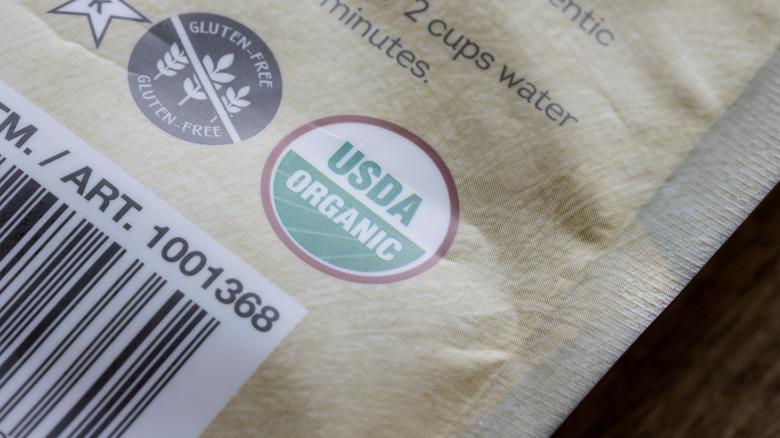
Imagine two food products that both carry an organic certification. From the packaging alone, a consumer may see similar claims.
Now imagine that one product provides a digital experience where customers can access relevant information about its certification, while the other provides only the claim printed on the package.
This does not automatically mean that one product is more legitimate than the other. Certification validity depends on the applicable certification system and the responsible certifying organization.
The difference is how easily additional information can be accessed.
This distinction matters because modern consumers can encounter product claims through websites, social media, marketplaces, retailer platforms, and physical packaging. Making appropriate supporting information easier to access can help a brand communicate more clearly without relying solely on promotional language.
Compliance Data Can Become Customer Experience
Food companies already collect substantial amounts of information. Supplier records, batch information, certificates, ingredient information, production records, shipment information, and traceability records can all form part of a company's operational information environment.
Some of this information may be useful beyond compliance.
For example, appropriate certification information can contribute to a digital product page. Relevant origin information can help explain where a product comes from. Batch information can connect a specific product with relevant records. Supporting documents can provide evidence for information that a company communicates publicly.
The transformation is therefore not necessarily about collecting completely new information.
It can be about using existing information more effectively.
Data collected for compliance can become information delivered for transparency.
Transparency Does Not Mean Showing Everything
There is a common misconception that transparency means publishing every piece of information a company possesses.
That is neither practical nor necessarily desirable.
Businesses may need to protect commercially sensitive information, personal information, security-related information, and other confidential data. Transparency should therefore be relevant and purposeful.
Good transparency means providing information that is accurate, current, understandable, and appropriate for the audience. Where relevant, information should also be connected to reliable sources or supporting evidence.
The objective is not maximum disclosure.
The objective is useful disclosure.
Transparency Can Strengthen Brand Communication
Food companies invest significant effort in explaining what makes their products different. Brands may talk about their ingredients, sourcing, production methods, certifications, sustainability practices, or geographic origin.
However, there is a difference between communicating a statement and providing useful information that explains it.
A brand might say that it cares about sourcing. It can also provide relevant information about where an ingredient comes from.
A brand might display a certification. It can also help customers understand what that certification means and which product it applies to.
This creates a stronger connection between marketing communication and factual product information.
Instead of simply asking consumers to believe a statement, brands can make relevant information available for consumers who want to investigate further.
Traceability Is Becoming More Visible
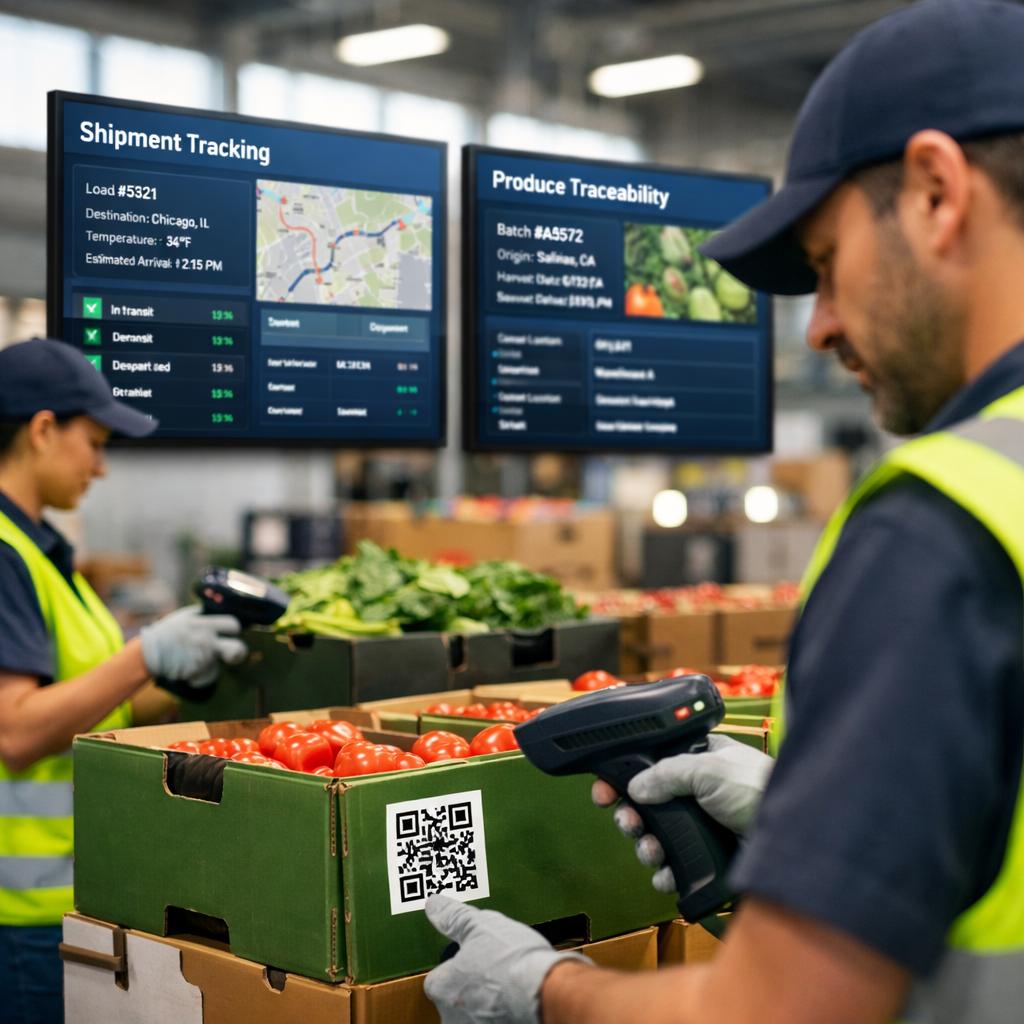
Traceability is becoming increasingly visible within the broader food industry because regulators and businesses need better ways to understand the movement of food through complex supply chains.
The FDA's Food Traceability Rule is one example. The rule establishes additional recordkeeping requirements for certain foods and is intended to support faster identification and removal of potentially contaminated food from the market.
The European Union also places significant importance on traceability as part of its food-safety framework.
These developments show that structured supply-chain information is not simply an emerging marketing trend. It is already an important part of food-safety infrastructure.
The strategic opportunity for businesses is to build systems where useful information can serve more than one purpose.
Build Once, Use the Information Across the Business
A food company may initially collect information because it is required for compliance. But properly structured information can potentially support several other areas of the business.
The same product information can support regulatory records, quality management, supply-chain operations, customer-service questions, product pages, marketing communication, and consumer education.
This is where digital systems become important.
Traceability platforms, structured product databases, document-management systems, APIs, and automated verification technologies can help businesses connect information that might otherwise remain scattered across different systems.
The objective is not to introduce technology simply because it is available.
The objective is to make reliable information easier to manage, verify, update, and communicate.
Transparency and Digital Commerce
Food discovery is increasingly digital. Consumers can encounter products through brand websites, online marketplaces, retailer websites, search engines, social media, and other digital channels.
This means product information needs to work beyond the physical package.
A consumer might want to know where a product came from, what ingredients it contains, whether it contains a particular allergen, what certification applies to it, or what a particular claim means.
If this information is scattered across different pages or difficult to find, consumers may have difficulty forming a clear understanding of the product.
A structured digital product experience can bring relevant information together in one place.
This can be particularly useful as food brands create richer digital identities for their products.
From a Physical Label to a Digital Product Identity
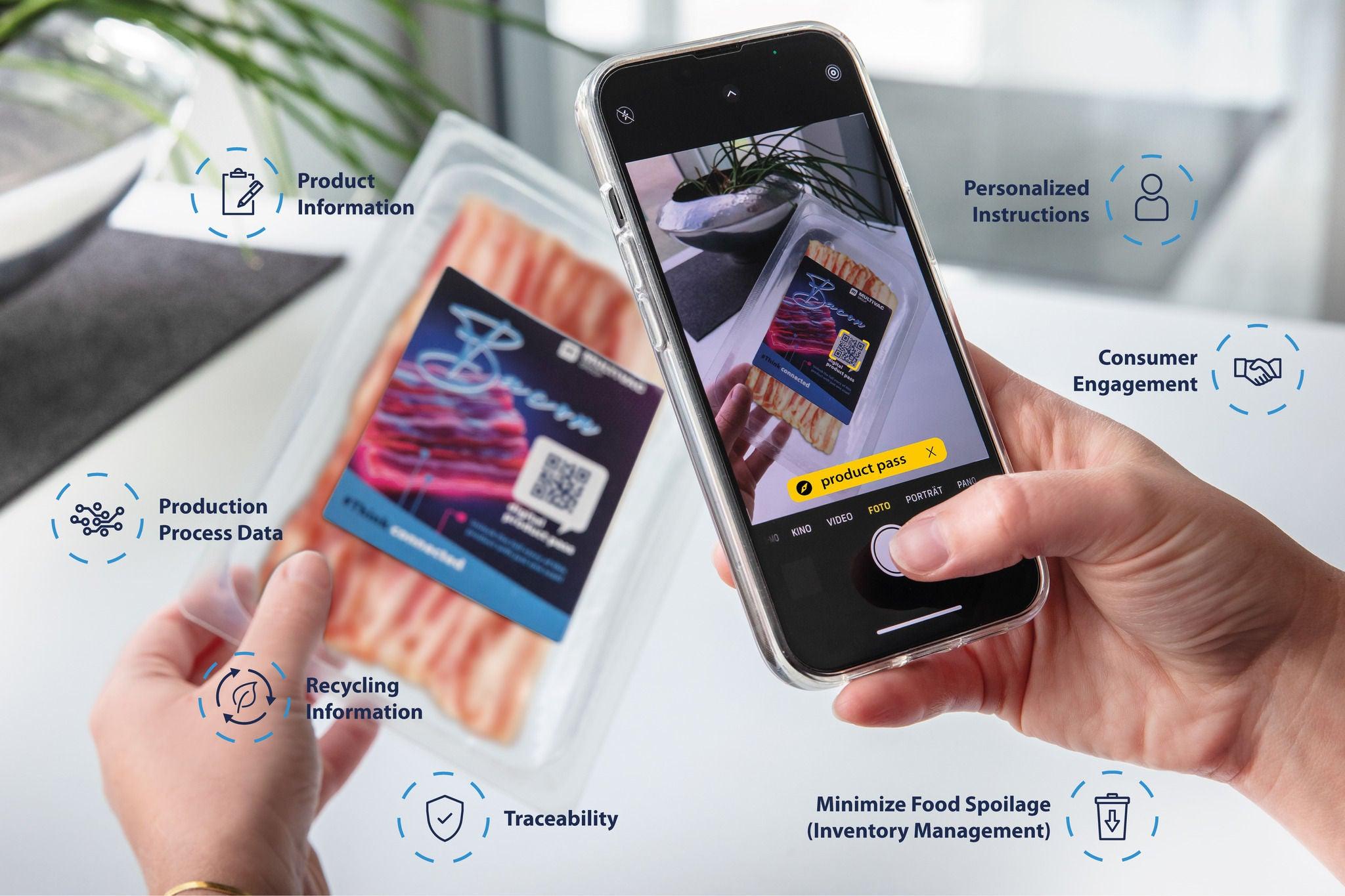
A physical package has limited space. It cannot realistically contain an entire product history, supply-chain record, certification file, or set of supporting documents.
Digital technologies provide another possibility.
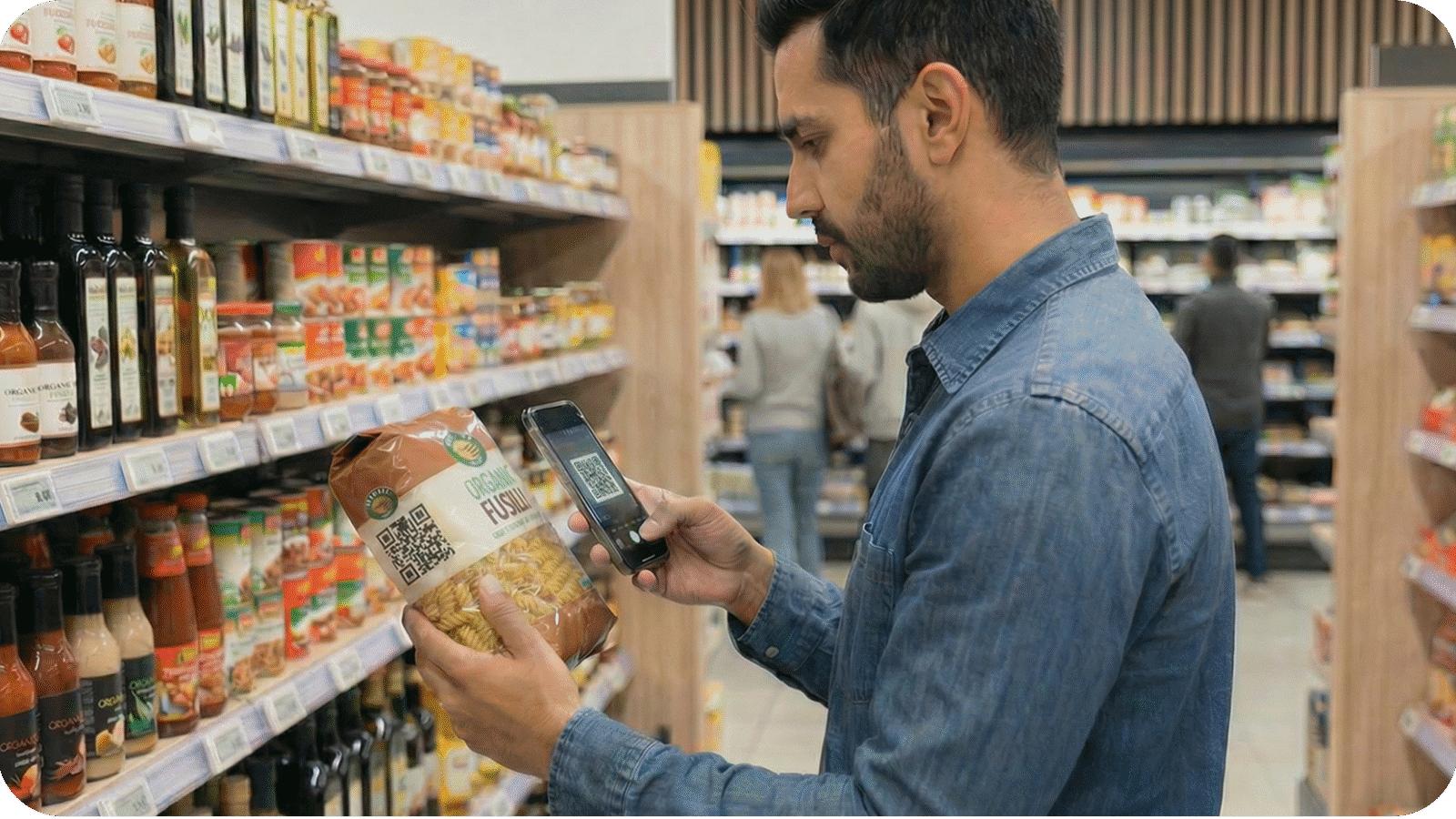
A product identifier or QR code can potentially connect a physical product with a digital information page. Depending on the product and the information the business chooses to provide, customers could access details about ingredients, certifications, origin, production, or other relevant information.
The physical product remains the same.
What changes is the amount of information that can be connected to it digitally.
This creates the possibility of treating a product as more than an item with a label. It can have a connected digital identity containing relevant information throughout its lifecycle.
Transparency Is Not a Replacement for Compliance
It is important to make one distinction clear: transparency does not replace compliance.
Food businesses still need to meet the laws, regulations, certification requirements, and food-safety obligations applicable to their products and markets.
A digital product page cannot replace a legally required record. A marketing statement cannot replace a valid certification. And a QR code does not automatically make a product traceable.
Instead, transparency can build on a company's existing compliance and information-management infrastructure.
The strategic question is whether businesses can make appropriate use of the information they are already required to maintain.
The New Question for Food Businesses
For many years, one of the central questions for food businesses has been:
"Are we compliant?"
That question will remain essential.
But another question is becoming increasingly relevant:
"Can we clearly explain our product with reliable information?"
Businesses can also ask whether customers can easily find the information they need, whether product claims are supported by appropriate evidence, and whether information remains consistent across different digital channels.
These questions move the conversation from compliance alone toward transparency and information quality.
The Business Opportunity
Food transparency does not need to be treated as another disconnected initiative.
It can become part of a broader strategy for managing product information.
A company that structures its data effectively can potentially use appropriate information across compliance, quality, operations, customer service, marketing, e-commerce, and consumer education.
This can create a more connected relationship between the information inside a company and the information presented to the outside world.
The key is not simply having more data.
It is having reliable, relevant, accessible, and understandable data.
The Future of Food Transparency
The future of food transparency is unlikely to be about putting more and more information onto physical packaging.
Instead, physical products can increasingly act as gateways to digital information.
The label can provide the essential information required for the product, while digital experiences can provide additional context for consumers who want to learn more.
For businesses, this can create a more connected information environment.
For consumers, it can make relevant product information easier to access.
For supply-chain partners, structured information can support better visibility and coordination.
And for compliance teams, better-connected data can support the processes they already need to manage.
Beyond Compliance
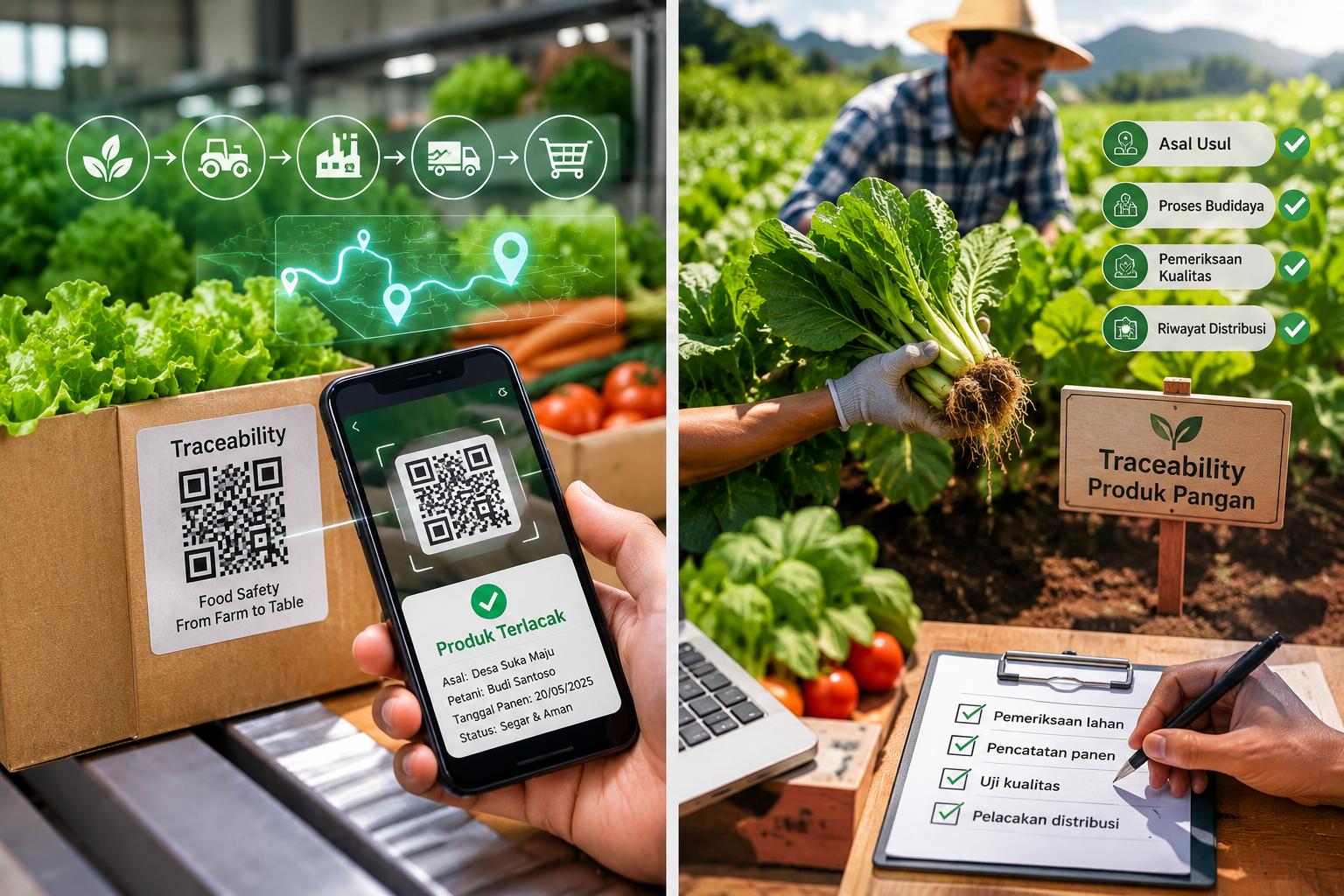
Food transparency is not about replacing food safety, regulation, or compliance.
It is about recognizing that the information created through those processes can have value beyond them.
A certification record can support product education. A traceability record can contribute to supply-chain visibility. Product data can support e-commerce. And reliable information can help consumers understand the products they are considering.
The brands that approach transparency strategically do not necessarily need to publish the most information.
They need to make the right information accessible, understandable, and trustworthy.
Because the question for food businesses is no longer only:
"Can we prove it when someone asks?"
It is also:
"Can we make the right information available when someone wants to know?"
That is where food transparency moves beyond compliance and becomes a potential business strategy.