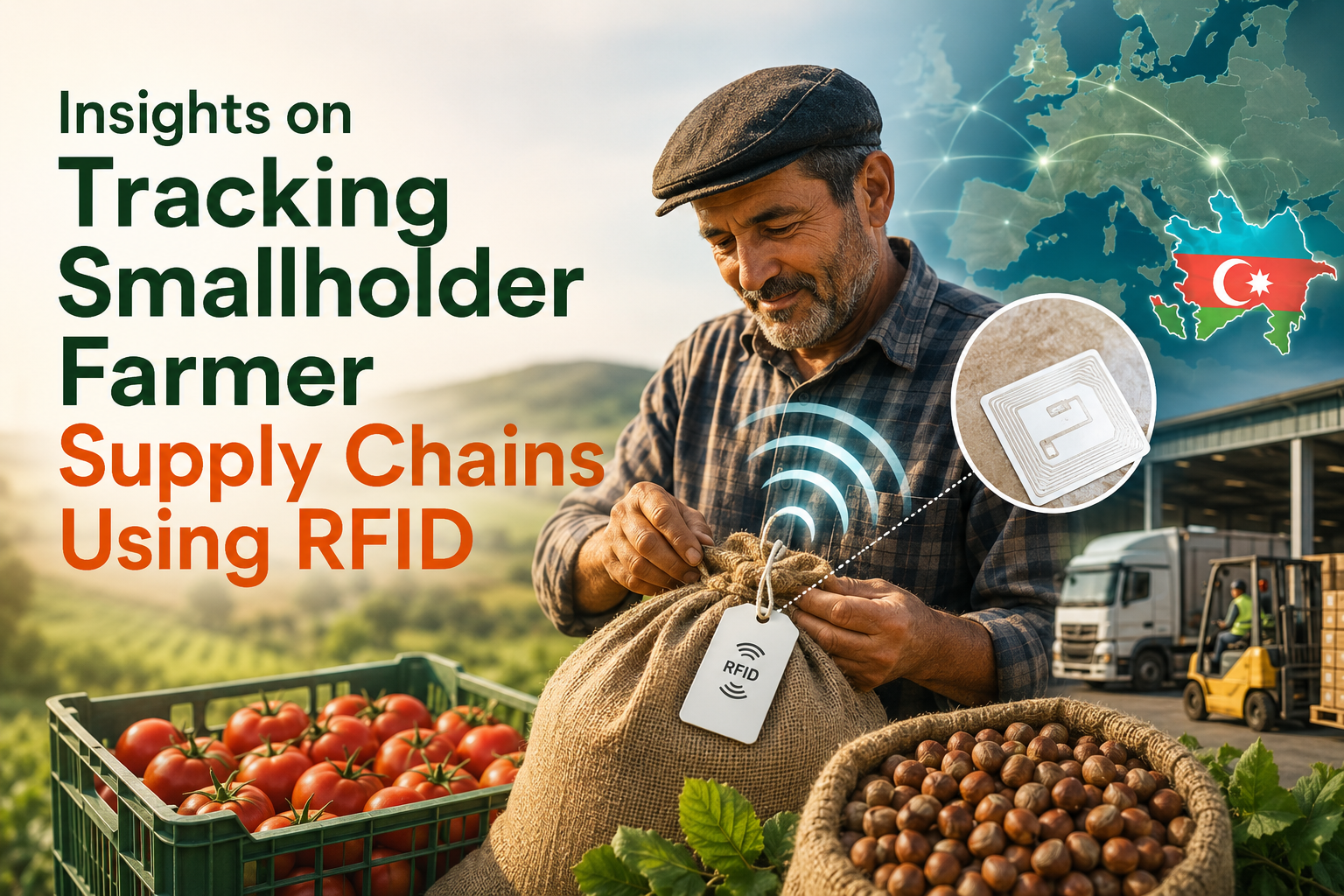
Insights on Tracking Smallholder Farmer Supply Chains Using RFID
April 16, 2026
In the rolling hills of Azerbaijan, where smallholder farmers have cultivated hazelnuts and tomatoes for generations, a quiet revolution began not with a grand declaration, but with a simple, practical question: how do you prove the integrity of a harvest? For the Azerbaijan Food Safety Agency, the challenge was stark. The country's agricultural exports to Europe, a vital source of revenue, were shadowed by a lack of transparency. Data on food safety was fragmented, often unreliable and the journey from a small family plot to a European supermarket shelf was a story told in gaps and assumptions.
The solution, implemented under the Asian Development Bank-funded Food Safety Insights for Agri Supply Chains project, was deceptively straightforward in concept yet profoundly complex in execution. It involved attaching small RFID tags to sacks of hazelnuts and crates of tomatoes. But this was never just about technology. It was about building a bridge of trust, connecting the hands that harvest with the markets that demand assurance. It was a project that recognized that true transparency is not downloaded from the cloud; it is cultivated in the soil, negotiated in collection centers and built through patient collaboration.
What unfolded in Azerbaijan offers a masterclass in pragmatic digital transformation. It moves beyond the theory of supply chain visibility into the gritty, human reality of making it work. This is the story of how a nation turned vulnerability into a strength, not by focusing on the tag, but on the system, the people and the story it allowed them to tell for the first time.
"True transparency is not downloaded from the cloud; it is cultivated in the soil, negotiated in collection centers and built through patient collaboration."
Where the Challenge Truly Began
The problem in Azerbaijan was never a lack of quality or effort. The hazelnuts were rich, the tomatoes vibrant. The issue was narrative. Each batch's story, its origin, its handling and its journey, was trapped in paper ledgers, fading memories and disconnected data points. For European buyers operating under stringent regulations like the EU's General Food Law, this narrative gap was a deal-breaker. A single safety incident could trigger costly, blanket recall because pinpointing the affected source was nearly impossible. The supply chain was a black box and inside that box was the hard work of thousands of smallholder farmers, their economic futures held hostage by uncertainty.

This was the core operational challenge: creating a reliable, end-to-end data stream from the most fragmented part of the chain, the small farms. It required moving from a system of batch-level ambiguity to one of item-level accountability. The goal was not surveillance, but salvation: to protect the export revenue that these communities depended on by building a verifiable record of safety and quality that traveled with the product itself.

Building Visibility from the Ground Up
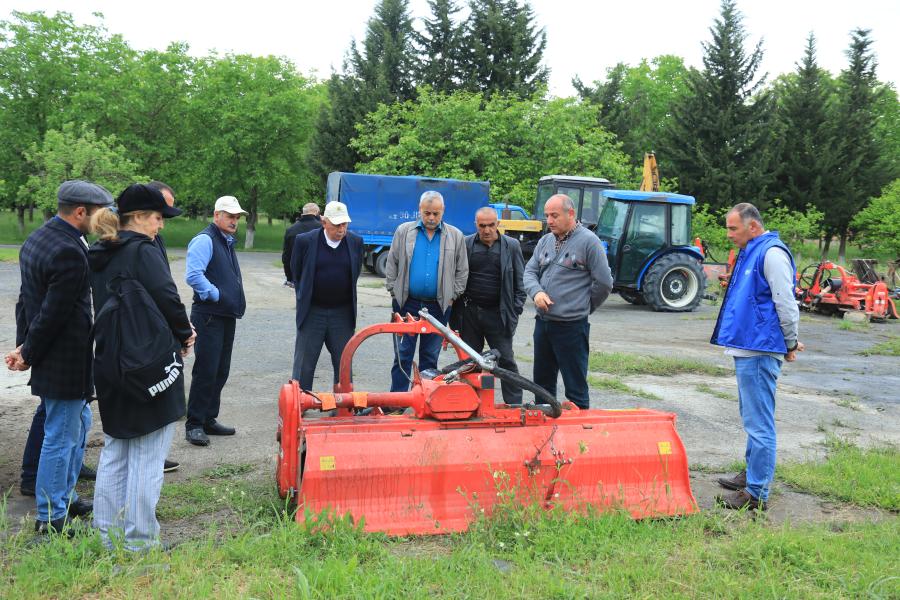
The project began not with hardware, but with conversation. Workshops brought together a constellation of stakeholders often separated by tradition and role: government officials from the Food Safety Agency, export company managers, logistics operators and, crucially, the farmers themselves. These sessions were less about teaching and more about listening. They mapped the existing, informal pathways of the hazelnut and tomato supply chains, identifying the precise moments where data was lost: the handoff from farmer to collector, the transfer into drying sheds and the consolidation into export loads.
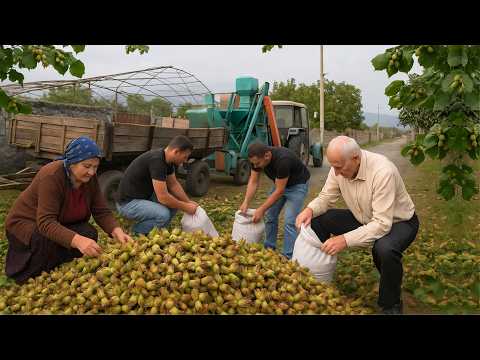
From this collaborative diagnosis, the data structure was born. What information was essential? Farmer ID, geo-coordinates of the specific plot, harvest date, initial weight and moisture reading. This was not an arbitrary list imposed from above; it was a negotiated set of facts that every party agreed to tell the true story of the product. Only then did technology enter the frame. RFID was selected not as a magic wand, but as the most practical tool for the job, able to withstand the dusty, organic environments of farms and processing centers and to be read quickly without line-of-sight, automating the capture of that agreed-upon story at each critical transfer point.
"RFID was selected not as a magic wand, but as the most practical tool for the job, able to withstand the dusty, organic environments of farms."
What RFID Changed in Practice
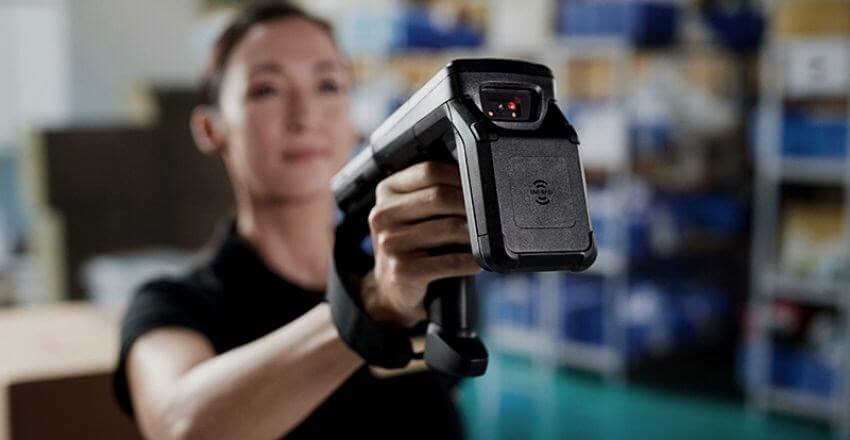
On the ground, the change was both subtle and profound. At collection centers, a farmer's sack of hazelnuts was no longer just weighed. It was tagged. A durable UHF RFID label was attached, its unique digital identity instantly linked in a central database to that farmer, that field and that day's harvest. This simple act transformed the sack from an anonymous commodity into a traceable asset. As it moved into drying facilities, fixed readers at the doors automatically logged its entry and exit, ensuring it received the precise drying time needed. No more guesswork, no more commingling of batches.
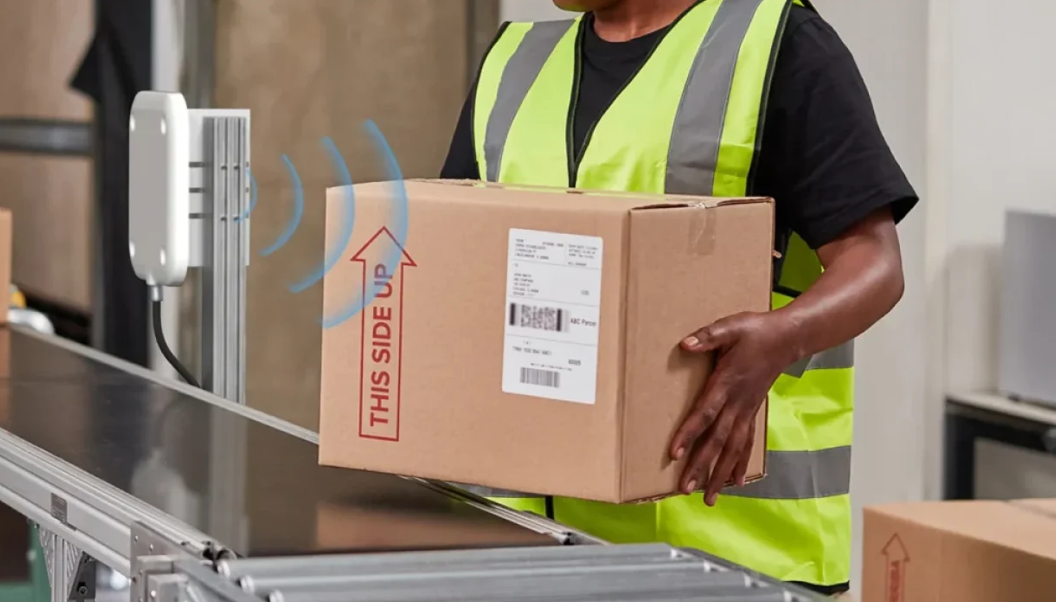
In warehouses, forklifts equipped with readers could take inventory of hundreds of tagged pallets in minutes, a task that once took days. The system enforced First-In-First-Out rotation, drastically reducing the risk of spoilage for perishable tomatoes. For the first time, managers had a real-time, accurate picture of what they owned and where it was. But the most significant shift was in response capability. If a quality query came from a buyer in Germany, the system could trace the concerned batch back not just to a region, but to a specific group of farms and a harvest date within hours. The black box had become a glass box.
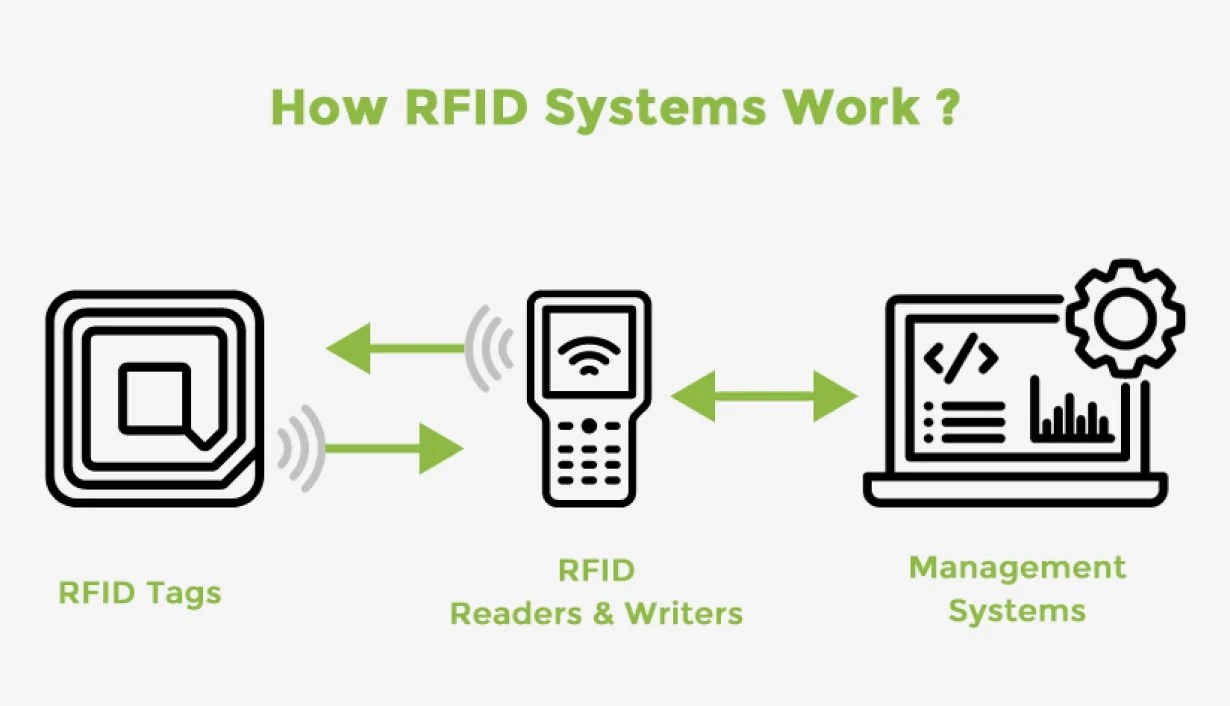
How RFID systems work: RFID tags communicate wirelessly with readers and writers that feed data directly into management systems, creating an automated and continuous digital record
The Human Side of Digital Transformation
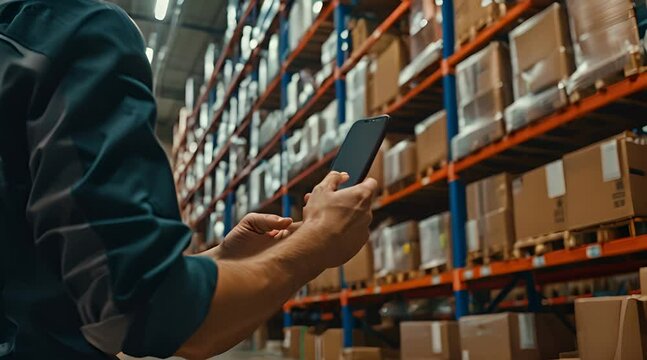
Technology fails without trust. The project invested heavily in training, not as a one-time event, but as an ongoing dialogue. Field workers learned to use mobile apps to scan tags and input simple data. Farmers were shown how the tag on their sack was a digital ambassador for their hard work, carrying proof of their good practices to international markets. They were not passive subjects of a system; they were active participants in a new value proposition.

This human-centric approach tackled the classic adoption hurdles: skepticism, fear of complexity and disruption of routine. By demonstrating tangible benefits, fairer attribution of quality, faster payments based on accurate tracking and ultimately, more secure market access, the system earned its social license. The RFID tag became a symbol not of control, but of connection. It linked the farmers’ pride in their land to the buyer's need for assurance, creating a shared stake in the integrity of the final product.
"The RFID tag became a symbol not of control, but of connection, linking the farmer's pride in their land to the buyer's need for assurance."
From Data Collection to Real Insight
The ultimate success of the Azerbaijan project was not the database it filled, but the decisions it informed. The aggregated, reliable data flowing from thousands of tags created the country's first national-level supply chain repository for these key crops. This was no longer just tracking for tracking's sake. The Food Safety Agency could move from reactive oversight to proactive insight. They could identify patterns: perhaps tomatoes from a certain micro-climate consistently showed higher quality scores or hazelnuts dried in a specific facility had lower spoilage rates.
This intelligence allowed for targeted interventions: advising farmer cooperatives on best practices, optimizing logistics routes and providing irrefutable evidence to justify premium pricing in export negotiations. The data transformed from a compliance record into a strategic asset. It enabled a new conversation with European partners; one built on demonstrated transparency rather than promised trust. The supply chain became not just efficient, but intelligent, capable of learning and improving with every harvest cycle.

"The data transformed from a compliance record into a strategic asset, enabling a new conversation with European partners built on demonstrated transparency."
Conclusion
The story from Azerbaijan's fields is a powerful antidote to the hype that often surrounds digital innovation. It reminds us that the most advanced technology is worthless without the humility to listen to those who use it and the patience to build systems with people, not for them. The RFID tags on the sacks of hazelnuts and tomatoes were not the heroes of this story. The heroes were the farmers who embraced a new way of working, the officials who championed collaboration over control and the collective understanding that in a global market, transparency is the ultimate currency.
This project leaves us with a lasting lesson: traceability is not a technological feature to be installed, but a cultural practice to be nurtured. It is the art of making the invisible journey of our food visible, credible and valuable to everyone involved. In doing so, Azerbaijan did more than secure its export markets; it wove a stronger, more resilient fabric of trust that connects its soil to the world, one tagged harvest at a time.
"Traceability is not a technological feature to be installed, but a cultural practice to be nurtured."
Reference
- Solving Food Supply Chain Blind Spots with RFID Technology. The Traceability Hub.
- Role of RFID and GPS in Food Supply Chains. ISA Halal.
- RFID for Traceability and Inventory Management. University of Twente.The Manufacturer.
- Food Safety with RFID: Complete Guide on Food Tracking and Tracing. Lowry Solutions.
- Farm to Fork: How RFID is Transforming Food Traceability. ABR.
- GS1 Global Traceability Standard (GTS). GS1.
- FDA Food Traceability Final Rule. Federal Register.
- RFID Market for Food and Beverages: Global Forecast. MarketsandMarkets.
- RFID in the Food Industry. RFID Journal.